FastPip Special Report
Iran–US–Israel Ceasefire: Geopolitical Shock, Oil Spike, and Temporary Market Calm
In the early hours of April 7, 2026, after weeks of escalating military and economic tensions in the Middle East, credible international sources reported that Iran, the United States, and Israel had reached a limited and temporary ceasefire. This agreement is not only a significant political development, but it also had an immediate and profound impact on global markets—especially the energy sector.
At the peak of tensions, US crude oil (WTI) surged toward $120 per barrel, driven by geopolitical risks and fears of supply disruption. However, following confirmation of the ceasefire, the market reacted sharply, pushing prices down to around $91. At the same time, Brent crude stabilized near $91.70.
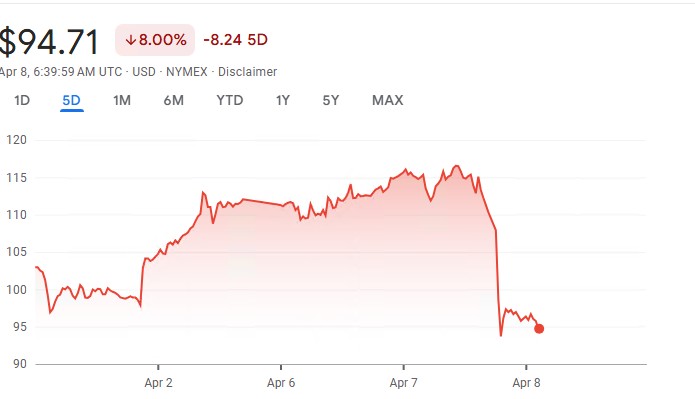
This sharp decline reflects the removal of a substantial portion of the geopolitical risk premium that had been priced into oil during the crisis—mainly driven by fears of disruptions in global energy supply.
This ceasefire emerged at a time when markets were experiencing one of the highest levels of geopolitical risk in recent years. Threats of closing the Strait of Hormuz, rising regional attacks, and the possibility of a direct military conflict had pushed investors into a clear Risk-Off mode.
As a result:
- Capital flowed out of risk assets
- Safe-haven demand increased
- Market volatility surged
This event should not be viewed merely as a political development, but rather as a key catalyst in reshaping market expectations. The rapid reaction in oil prices and the partial recovery in risk sentiment indicate that recent market movements were largely driven by expectations and fear—not actual changes in supply and demand.
In this report, we will:
- Examine the roots of the recent tensions
- Analyze the structure and drivers behind the ceasefire
- Provide a comprehensive outlook on global markets and future scenarios
The Beginning of the Crisis: How Did It Start?
To properly understand the ceasefire, we must go back several weeks—when tensions gradually escalated from political friction to the brink of direct military confrontation.
Phase One: Rising Pressure on Iran’s Nuclear Program
Tensions intensified when the United States and Israel publicly raised concerns over Iran’s nuclear advancements. At this stage, the approach shifted from diplomatic pressure to operational and security-driven actions.
This marked the beginning of an Escalation Cycle, where each move triggered a stronger counter-response
Phase Two: Targeted Attacks and Retaliation
As tensions escalated, reports emerged suggesting that the United States and its allies carried out targeted military operations under the justification of supporting internal unrest in Iran and containing regional threats.
These operations reportedly included:
- Strikes on sensitive military infrastructure
- Targeting command centers
- Efforts to weaken Iran’s operational capabilities
Although full details were not officially confirmed, market reactions clearly treated these developments as a major escalation.
At this point, markets concluded:
The conflict had entered an active operational phase
In response, Iran increased military readiness, and reports of indirect retaliatory actions across the region began to surface—significantly raising the probability of a direct confrontation.
This stage marked the transition from political tension to an active conflict with regional expansion potential.
Phase Three: Strait of Hormuz – The Critical Flashpoint
The most decisive moment came when the Strait of Hormuz entered the equation.
Iran moved to restrict traffic through the strait—one of the most vital global energy routes, responsible for approximately 20% of global oil flow.
Consequences:
- Global energy prices surged
- Shipping and insurance costs increased
- Economic pressure intensified, especially in Europe
Result: The market shifted from perceived risk to real supply risk
Phase Four: Donald Trump’s Ultimatum – The Edge of War
As the crisis deepened, Donald Trump issued a formal ultimatum:
- If energy routes were not reopened
- And regional tensions continued
The United States would move into direct large-scale military action
This pushed the situation to the brink of full-scale war.
Market Reaction
Following the ultimatum:
- Oil surged again toward $115–$120
- Volatility intensified
- Markets entered Pre-War Pricing mode
Phase Five: Ceasefire – Temporary Stability Returns
At the peak of the crisis, conditions reached a point where continued escalation became economically and politically unsustainable for all parties.
This led to a temporary and conditional ceasefire.
Key Terms:
- Temporary halt to military operations
- De-escalation in energy routes
- Initiation of indirect negotiations
- Limited timeframe (approximately two weeks)
This is a tactical ceasefire—not a permanent peace agreement
Market Reaction to Ceasefire
- Oil dropped from ~$120 → $90–$95
- Brent stabilized around ~$91
Interpretation:
The prior rally was largely driven by geopolitical fear—not actual supply shortages.
Why Did the Ceasefire Happen?
Energy Market Pressure
- Rising oil prices → global inflation risk
- Threat of economic slowdown
- Pressure on central banks
Continued conflict = unsustainable cost for all parties
Risk of Losing Control
- Potential full closure of Hormuz
- Oil spike above $130
- Market panic scenario
This outcome was unacceptable for all sides
FastPip Strategic Analysis: What Happens Next?
This ceasefire should not be seen as the end of the crisis—but as a pause in a structural conflict.
What matters now:
Stability of the ceasefire
Behavior of the involved parties
We analyze future scenarios from two perspectives:
- Geopolitics
- Oil market dynamics
Political Outlook: Is De-escalation Real?
Core conflicts remain unresolved:
- Nuclear program
- Regional influence
- Sanctions structure
Most likely scenario:
Fragile Stability
Meaning:
- Negotiations continue
- Tensions persist
- Risk of re-escalation remains
Key shift:
Markets are now Headline-Driven
Oil Market Outlook
The drop from $120 → $90 confirms:
The rally was fear-driven, not supply-driven
Base Scenario (Most Likely)
- Ceasefire holds, tensions remain
- Hormuz stays open but risky
Oil Range: $85 – $100
Bullish Stability Scenario
- Successful negotiations
- Reduced geopolitical risk
Oil Range: $80 – $85
(Probability: Low)
Bearish Crisis Scenario (Re-escalation)
- Ceasefire collapses
- Hormuz threatened again
Oil Range: $110 – $130
Professional Insight:
Expect gaps, slippage, and extreme volatility
Financial Market Behavior Going Forward
Increased Sensitivity to News
Markets are now:
- Less technical
- More fundamentally driven
- Oil as a Macro Indicator
Oil now signals:
- Global risk
- Inflation
- Monetary policy direction
Oil movement = market direction
- Temporary Return of Risk-On
Markets have stabilized slightly—but:
Not sustainable
Fully news-dependent
FastPip Professional Conclusion
What we have now:
- The crisis is not resolved
- Only managed
- Markets remain in a waiting phase
Trader’s Perspective
- Markets are in uncertainty mode
- Volatility remains high
Best strategy:
Flexibility + fast reaction to news
Key Insight of This Crisis:
“The war may have paused—but the risk is still priced in.”
 Check Our
  Whether you’re a day trader or a long-term investor, FastPip gives you the tools to trade smarter, not harder.