Why Risk Management Is Critical in Copy Trading
Copy trading risk management has become one of the most important topics in the modern financial industry. Over the last decade, copy trading platforms have attracted millions of investors who want to participate in financial markets without becoming full-time traders themselves. The concept looks simple, fast, and highly profitable. An investor connects their account to a professional trader, automatically copies every position, and potentially earns profit without deep technical knowledge.
At first glance, the idea sounds extremely attractive.
Investors are promised:
- Passive trading opportunities
- Easy access to Forex and CFD markets
- Automated execution
- Fast account growth
- And the ability to benefit from experienced traders
However, behind the attractive marketing and impressive performance statistics lies a major hidden danger that many investors fail to understand properly: poor copy trading risk management.
Many investors focus almost entirely on:
- Monthly returns
- Win rate
- Equity growth
- Number of followers
- And account rankings
But they ignore the most important factor in long-term investing:
How much risk is being taken to generate those profits?
This single question separates professional investing from dangerous speculation.
Many copy trading systems generate impressive short-term returns by using:
- High leverage
- Martingale strategies
- Grid systems
- Floating drawdowns
- Excessive exposure
- Or trading without stop loss protection
As long as market conditions remain stable, these systems may continue generating attractive profits. But when volatility suddenly increases or the market enters a strong trend, hidden risk can rapidly destroy accounts.
This is why professional investors always prioritize:
- Capital preservation
- Exposure control
- Drawdown management
- And long-term survivability
over aggressive short-term profit.
At FastPip, we strongly believe that sustainable investing depends on disciplined risk management rather than unrealistic profit expectations.
If you are interested in professional trading analysis, you can also explore our latest market setups here:
You can also improve your market knowledge through our educational trading articles:
For additional educational material about risk management and leveraged trading, resources like Investopedia Risk Management Guide and Babypips Forex Education are also useful references for traders and investors.
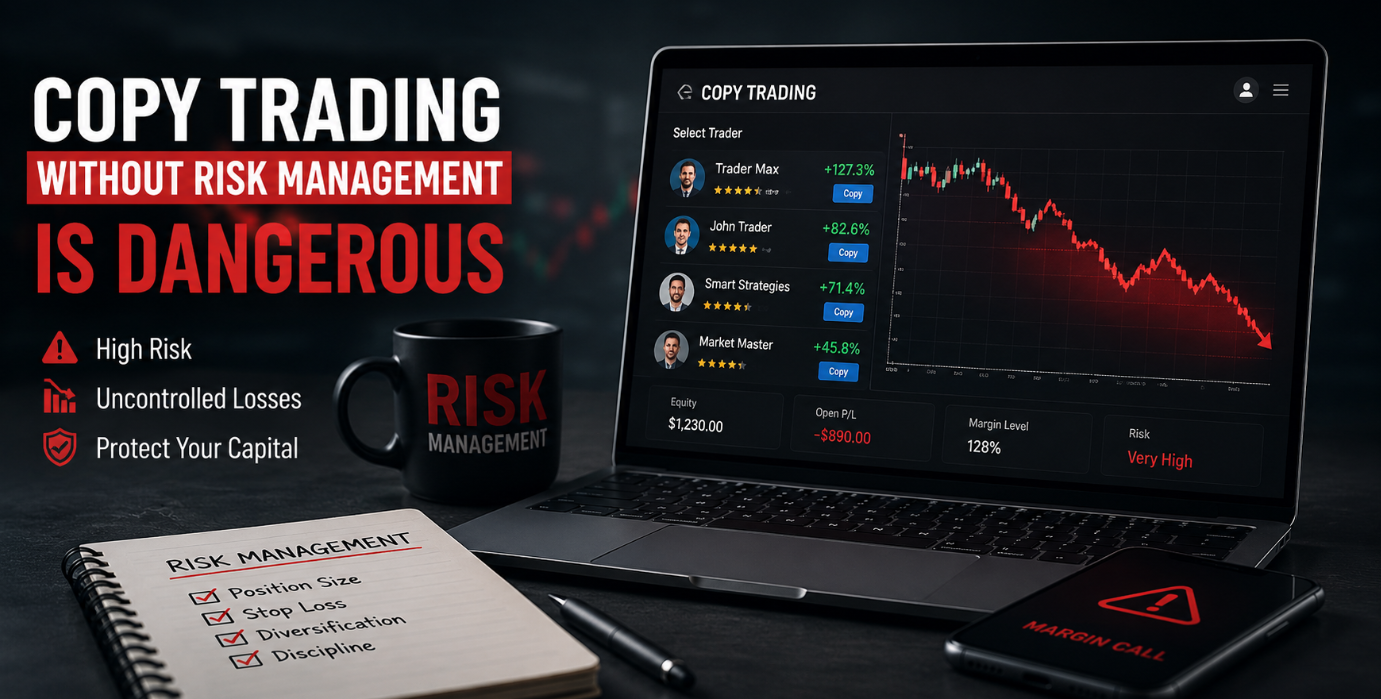
Why Copy Trading Risk Management Matters More Than Profit
One of the biggest mistakes investors make is assuming that high profits automatically indicate professional trading quality.
In reality, many of the most dangerous trading systems in the market often show the most attractive short-term performance.
A trader may display:
- 40% monthly returns
- A smooth equity curve
- Very small visible drawdowns
- And a high win rate
But this does not necessarily mean the system is safe.
Many traders achieve these results through dangerous exposure management.
For example:
- Increasing lot size aggressively
- Using extreme leverage
- Refusing to close losing trades
- Or averaging losing positions repeatedly
These methods can create beautiful short-term performance statistics, but they also create structural weakness.
Professional copy trading risk management focuses on:
- Limiting downside risk
- Protecting equity during crises
- Controlling floating exposure
- And maintaining survivability during abnormal market conditions
Because financial markets eventually punish uncontrolled risk.
The Hidden Danger of High Win Rates
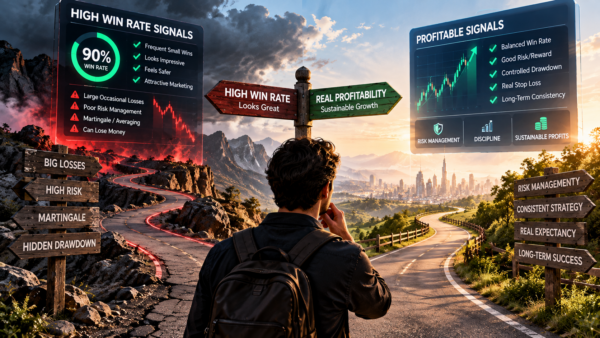
One of the most deceptive metrics in copy trading is win rate.
When investors see:
- 90% winning trades
- Long periods without losses
- Or consistent weekly profits
they naturally assume the system is highly professional.
But experienced traders understand that win rate alone means almost nothing without understanding:
- Risk structure
- Exposure management
- And drawdown behavior
Many dangerous systems achieve high win rates simply by refusing to close losing trades.
Instead of accepting losses, they:
- Hold losing positions
- Increase exposure
- Use Martingale systems
- Or wait indefinitely for market reversal
This creates an artificial appearance of stability.
Eventually, when the market trends strongly in one direction, floating losses become uncontrollable and the system collapses.
This is why professional investors focus less on win rate and more on:
- Risk-adjusted return
- Equity stability
- Maximum drawdown
- And crisis survivability
Why Leverage Becomes Extremely Dangerous
Leverage is one of the biggest hidden dangers in copy trading.
High leverage allows traders to generate:
- Faster profits
- Bigger short-term returns
- And more aggressive account growth
But leverage also magnifies losses dramatically.
A highly leveraged account may survive during calm market conditions, but even a small market shock can rapidly destroy equity.
This becomes especially dangerous during:
- Central bank announcements
- Flash crashes
- Geopolitical events
- Or liquidity crises
Professional hedge funds and institutional traders carefully control leverage because they understand:
- Survival matters more than aggressive growth.
Unfortunately, many copy trading systems prioritize:
- Marketing performance
instead of: - Long-term stability
This is why copy trading risk management must always include strict leverage control.
Why Floating Drawdown Is So Dangerous
Floating drawdown is one of the least understood risks among retail investors.
Many investors only look at:
- Closed profit
- Account balance
- Or historical returns
But professional traders focus heavily on:
- Open exposure
- Floating losses
- Margin utilization
- And real-time equity pressure
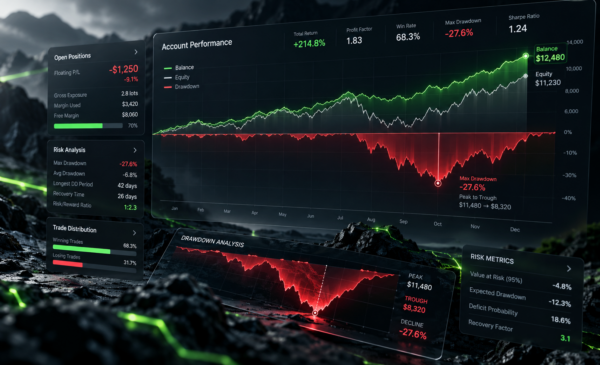
A system may appear profitable while carrying extremely dangerous floating losses beneath the surface.
This creates a false sense of security.
Many systems avoid realizing losses because closed losses damage visible statistics.
Instead, they:
- Hold losing trades
- Average positions
- Or increase exposure
As a result:
- The balance curve looks stable
- But the real equity becomes fragile
When market volatility suddenly increases, floating drawdown can quickly spiral out of control.
This is why copy trading risk management should always evaluate:
- Floating exposure
- Maximum open risk
- And worst-case scenario behavior
rather than simply looking at profits.
Why Martingale Systems Eventually Collapse
Martingale strategies are extremely common in copy trading.
At first, Martingale systems appear highly successful because:
- Most trades eventually close in profit
- Drawdowns remain hidden temporarily
- And the equity curve looks smooth
But beneath the surface, risk grows exponentially.
Martingale works by increasing position size after losses.
For example:
- 1 lot
- 2 lots
- 4 lots
- 8 lots
- 16 lots
Exposure rapidly becomes dangerous.
Eventually, one strong market trend becomes enough to:
- Trigger margin pressure
- Destroy equity
- And wipe out the account
Many investors fail to recognize this danger because Martingale systems often perform extremely well before collapse.
Professional copy trading risk management avoids unlimited exposure structures because professionals understand:
- Every strategy eventually experiences adverse market conditions.
Why Market Conditions Eventually Change
One of the most important realities in trading is that markets constantly evolve.
A strategy that performs well during:
- Low volatility
- Range-bound markets
- Or calm conditions
may fail completely during:
- Strong trends
- Economic crises
- Or geopolitical instability
Many copy trading systems survive only because they have not yet faced a true market crisis.
This creates a dangerous illusion of stability.
Professional investors always ask:
- How does the system behave during extreme volatility?
- Can it survive liquidity shocks?
- What happens during strong market trends?
Because true risk only becomes visible during difficult market conditions.
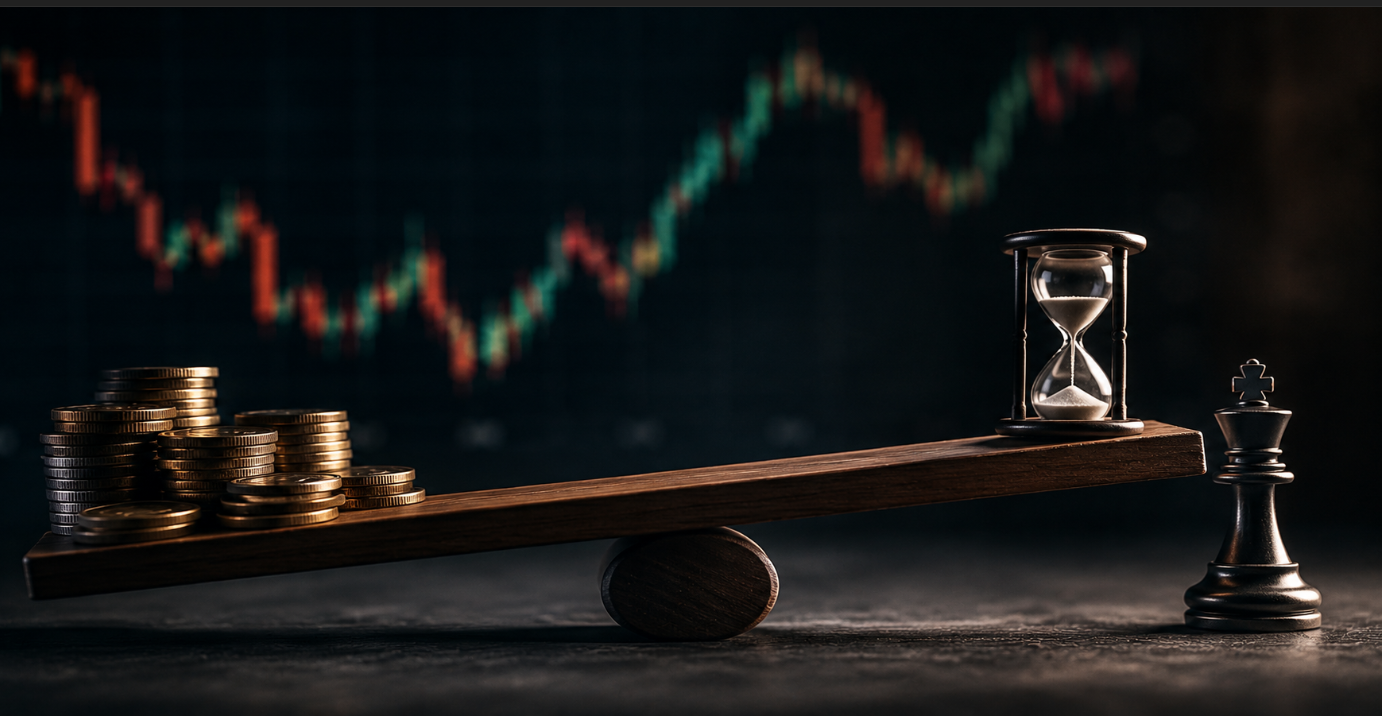
Why Capital Preservation Matters More Than Fast Growth
Professional investors understand a critical principle:
Protecting capital is more important than generating fast profit.
Many retail investors chase:
- Aggressive returns
- Rapid account growth
- And unrealistic performance
But experienced traders focus on:
- Stability
- Drawdown control
- Consistency
- And long-term survival
Because recovering from large losses becomes mathematically difficult.
For example:
- A 50% drawdown requires 100% recovery
- A 70% drawdown requires over 230% recovery
This is why professional copy trading risk management prioritizes:
- Controlled exposure
- Conservative leverage
- And sustainable performance
instead of explosive short-term growth.
The Psychological Trap of Copy Trading
Copy trading creates dangerous psychological biases.
When investors see:
- Months of profitability
- High rankings
- Large follower counts
- And strong equity growth
they often assume the system is safe.
This creates:
- FOMO
- Overconfidence
- And excessive trust
As a result, investors:
- Add more capital
- Reduce diversification
- And ignore risk warning signs
Ironically, many investors allocate the most capital exactly when hidden risk is at its highest.
Professional investors behave differently.
They become more cautious when a system appears “too perfect.”
Because in financial markets:
- Extreme consistency can sometimes hide extreme risk.
Why Transparency Matters in Copy Trading
Transparency is one of the most important elements of professional copy trading risk management.
A trustworthy system should clearly disclose:
- Maximum drawdown
- Floating exposure
- Leverage usage
- Risk per trade
- And crisis behavior
Unfortunately, many systems only advertise:
- Profit percentage
- Win rate
- And account growth
while hiding the true level of risk.
Professional investors understand:
- Hidden risk is often more dangerous than visible losses.
This is why transparency matters more than aggressive marketing.
Conclusion
Copy trading risk management is the foundation of long-term survival in financial markets.
Without proper risk control, even the most attractive systems can eventually become financial disasters.
Many copy trading systems appear stable only because:
- Market conditions remain favorable
- Hidden exposure has not yet been exposed
- Or floating losses remain unrealized
But real market conditions eventually reveal structural weakness.
This is why professional investors prioritize:
- Capital preservation
- Exposure management
- Controlled leverage
- Drawdown stability
- And crisis survivability
instead of blindly chasing high returns.
At FastPip, we believe sustainable growth is built through disciplined risk management, realistic expectations, and professional market structure — not through dangerous short-term speculation.
Because in trading, surviving the market is always more important than temporary profit.