Iran’s military has described recent threats from U.S. President Donald Trump as a sign of what it called “strategic desperation,” while warning that Tehran is prepared to launch more severe strikes as the conflict with Washington continues.
At the same time, Iran has outlined conditions under which it says the Strait of Hormuz could be reopened, raising the possibility of renewed diplomatic efforts even as tensions between the two countries remain high.
The developments come as the oil market continues to monitor the potential impact of the conflict on global energy supplies. On Wednesday, Brent crude was around $99.90 a barrel, while WTI traded near $90.42, with prices moving in different directions.
Iran Says US Threats Show “Strategic Desperation”
Iran’s General Staff said Wednesday that Trump’s threats against Tehran demonstrated what it described as a strategic dead end for the United States.
The statement warned that Iran remained prepared to respond with strikes that would be more damaging than previous attacks during the conflict.
Iran also accused Washington of using the United Nations platform to justify what Tehran considers military aggression.
The statements represent Iran’s position and have not been independently verified as an assessment of U.S. military capabilities.
Trump Says Washington Faces a Choice Between a Deal and Further Action
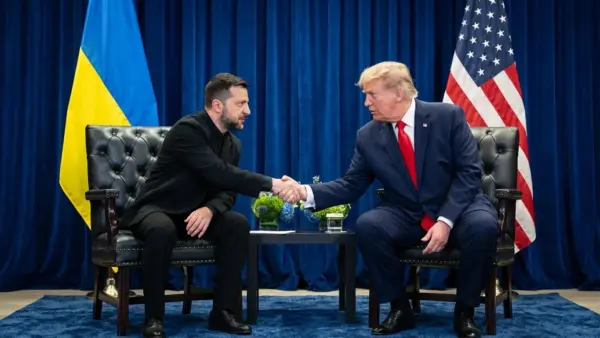
Trump said during his address to the United Nations General Assembly that the United States faced a choice between reaching an agreement with Iran and taking further military action.
He also said U.S. officials had held a three-hour meeting with Iranian representatives on the sidelines of the UN gathering and described the discussions as very good.
Trump said he expected a possible agreement after the U.S. midterm elections in November, while continuing to call for the economic isolation of Iran.
The latest developments have placed the diplomatic process at the center of attention for markets, particularly because any improvement in US-Iran relations could affect oil supply expectations and geopolitical risk.
For traders following the broader developments, the latest Breaking & Featured News remains particularly important as negotiations and military developments continue to change the market outlook.
Iran Sets Conditions for Reopening the Strait of Hormuz
Iran has communicated conditions for ending the conflict and restoring traffic through the Strait of Hormuz, according to Iranian officials and regional media reports.
The conditions include:
| Iran’s stated condition | Potential market relevance |
|---|---|
| Reduction in US military pressure | Could lower geopolitical risk |
| End of the naval blockade | Could improve shipping conditions |
| End of economic warfare | Could ease pressure on Iran’s economy |
| Release of Iranian assets | Could provide additional economic relief |
| Reopening of Hormuz | Could improve energy and shipping flows |
Iranian Foreign Ministry spokesman Esmaeil Baghaei said Tehran’s proposal includes an end to what Iran describes as U.S. acts of aggression, the removal of the naval blockade and an end to economic warfare.
A senior Iranian official separately said the Strait of Hormuz could be reopened within a week if the United States reduces military pressure and lifts its blockade of Iranian ports.
The proposal does not represent a confirmed agreement between the two sides. Rather, it outlines conditions presented by Iran as part of the ongoing diplomatic process.
Looking for actionable market insights and potential trading opportunities? Explore our latest Signals and stay informed about market movements.
Why the Strait of Hormuz Matters to Oil Markets
The Strait of Hormuz is one of the world’s most important energy corridors, connecting the Persian Gulf with global shipping routes.
Before the conflict, roughly one-fifth of global oil and gas shipments moved through the strait. Any prolonged disruption can therefore affect expectations for global supply, shipping costs and crude-oil prices.
Current shipping activity remains substantially below normal levels.
According to Kpler data cited in the source report, confirmed transits through Hormuz averaged approximately 6.98 million barrels per day during the seven days to September 20, compared with a pre-war baseline of around 18.3 million barrels per day.
That represents approximately 38% of the previous baseline.
The situation makes developments surrounding Hormuz particularly important for the Market Report section, as changes in shipping flows can affect the supply outlook for crude oil.
Iran’s Oil Exports Have Collapsed
Iran’s own crude exports have also been severely affected.
Kpler data cited in the report showed that Iranian crude loadings fell to zero so far in September, compared with approximately 893,000 barrels per day in July.
The decline reflects the impact of the U.S. naval blockade and the broader disruption to Iran’s ability to export crude.
Any meaningful change in the blockade or reopening of Hormuz could therefore become an important signal for oil traders assessing future supply.
Saudi Arabia and Alternative Oil Routes
The disruption has also changed how Gulf producers move their crude.
Kpler described the current shipping environment as increasingly dependent on alternative routes and Gulf logistics, while Saudi Arabia has shifted some exports toward its Gulf coast following disruption to the East-West pipeline after a Houthi attack.
The ability of regional producers to use alternative infrastructure is important because it can partially reduce the immediate impact of disruptions through Hormuz.
However, alternative routes do not necessarily provide a complete substitute for the capacity normally moving through the strait.
Oil Prices Remain Sensitive to US-Iran Developments
Oil prices were mixed on Wednesday as traders balanced geopolitical risks against expectations of improving supply and diplomatic progress.
Brent crude futures were around $99.90 per barrel, up 0.7%, while WTI futures were near $90.42, down 0.1%.
Recent market moves have shown that oil prices are reacting not only to military developments but also to signs that diplomatic negotiations could reduce the risk of prolonged supply disruption.
Reuters reported on Wednesday that oil prices were holding near their lowest levels in more than two weeks as expectations of improving Gulf supply and renewed U.S.-Iran talks weighed on the market.
This creates two competing forces for crude prices: continued geopolitical risk supports a risk premium, while progress toward diplomacy and improved supply flows can reduce that premium.
What the US-Iran Talks Could Mean for the Oil Market
The direction of the oil market will depend heavily on whether diplomatic contacts produce concrete changes in the conflict and shipping conditions.
Scenario 1: Progress Toward an Agreement
If negotiations lead to reduced military pressure and improved shipping conditions, the market could increasingly price in a recovery in oil flows.
That would potentially reduce the geopolitical risk premium in crude and could place downward pressure on Brent and WTI, particularly if additional Gulf supply reaches global markets.
Recent Reuters reporting has already linked hopes for progress in U.S.-Iran talks with lower oil prices.
Scenario 2: Continued or Renewed Escalation
If negotiations fail and military tensions increase, traders could again focus on the possibility of prolonged disruption to Gulf energy flows.
In that environment, the risk premium in crude could increase, while volatility across oil and other financial markets could rise.
These are market scenarios rather than confirmed outcomes.
Strait of Hormuz Remains the Key Market Focus
The latest developments leave the Strait of Hormuz at the center of the oil market outlook.
Iran has indicated that it could reopen the waterway if the United States reduces military pressure and lifts its blockade, while Washington continues to pursue negotiations alongside its broader pressure campaign.
Recent reporting confirms that Iranian officials have proposed reopening the strait under specific conditions, but no final agreement has been announced.
For oil traders, the most important signals to watch are therefore actual shipping flows, changes in Iranian exports, developments in the U.S.-Iran talks and any formal change in the status of the blockade.
Conclusion
Iran has presented conditions for reopening the Strait of Hormuz, including reduced U.S. military pressure and the lifting of the blockade on Iranian ports. At the same time, Washington and Tehran remain engaged in diplomatic contacts while tensions continue.
With Hormuz shipping still significantly below its pre-war level and Iranian crude exports severely disrupted, the market remains highly sensitive to any change in the conflict.
Brent and WTI prices are currently balancing geopolitical risk against expectations of improved supply and diplomatic progress.
Market Impact
The immediate market focus is oil supply risk: credible progress toward a US-Iran agreement and a reopening of the Strait of Hormuz could reduce the geopolitical premium in Brent and WTI, while renewed escalation or continued shipping disruption could support that premium and increase volatility. The latest market reporting shows that hopes for diplomacy and improving Gulf supply have already been weighing on crude prices, so traders are likely to watch actual shipping flows and negotiations rather than headlines alone.
FAQ
What conditions has Iran set for reopening the Strait of Hormuz?
Iran has said that reduced U.S. military pressure and the lifting of the blockade on Iranian ports are among the conditions for reopening the strait.
Is the Strait of Hormuz fully open?
The shipping flows cited in the report remain significantly below the pre-war baseline, indicating that traffic has not returned to normal levels.
Why is the Strait of Hormuz important for oil markets?
The waterway is a major global energy route through which a significant share of international oil and gas shipments normally passes.
 Check Our
  Whether you’re a day trader or a long-term investor, FastPip gives you the tools to trade smarter, not harder.