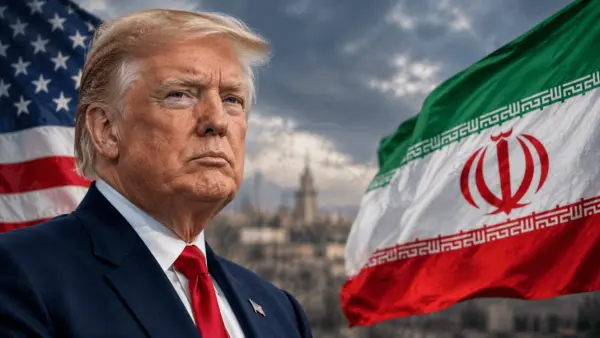
The United States and Iran are reportedly moving toward renewed negotiations in Qatar as diplomatic efforts to prevent another military confrontation coincide with warnings that President Donald Trump could consider fresh strikes against Iran after Tuesday’s midterm elections.
Reports indicate that the two sides have agreed on preliminary measures addressing Iran’s nuclear program and the Strait of Hormuz, where US naval forces have reportedly been escorting oil tankers.
The reported framework also includes potential financial incentives for Tehran, although the details have not been officially confirmed.
Qatar Mediates Renewed US-Iran Negotiations
The latest diplomatic effort followed approximately 12 hours of discussions in Tehran on Friday, during which Qatari mediators attempted to prevent another escalation between Washington and Tehran.
The mediators reportedly remained in regular contact with the White House throughout the discussions.
The proposed framework is said to cover several key issues, including Iran’s nuclear activities, the future of its enriched uranium stockpile and the reopening of the Strait of Hormuz.
However, the reported progress remains preliminary, and no finalized agreement has been announced.
Reported Framework Includes Uranium Transfer and Hormuz Reopening
One of the reported proposals would allow Iran to transfer its stockpile of highly enriched uranium to a third country agreed upon by the parties.
The framework also reportedly calls for the Strait of Hormuz to reopen within seven days of an initial agreement. China and Russia could potentially provide guarantees related to the implementation of the arrangement.
The reported proposal would therefore address both nuclear concerns and maritime security in a strategically important shipping corridor.
The details, however, remain subject to further negotiations and have not been confirmed as a final agreement.
Trump’s Warnings Raise Concerns About Renewed Military Action
Despite the diplomatic efforts, the possibility of another military confrontation remains a concern.
Reports have suggested that Trump could consider restarting strikes against Iran immediately after Tuesday’s midterm elections. The reports have not established that a final decision to launch new attacks has been made.
Trump, who was spending Saturday at Mar-a-Lago, said in a radio interview on Friday that the war was “going to end soon,” but did not explain how that outcome would be achieved.
An earlier preliminary agreement between Washington and Tehran, reached with the assistance of mediators in June, collapsed within weeks.
The possibility of another breakdown in negotiations therefore remains a major risk as diplomatic efforts continue.
Iran’s Supreme Leader Warns Against Further Attacks
Iran’s Supreme Leader Mojtaba Khamenei warned Washington against launching another military operation in a Telegram post on Saturday.
He said that if Iran faced further military or terrorist attacks, the country’s armed forces and people would determine the timing and conditions for ending the confrontation.
Khamenei also threatened what he described as a “geographically unrestricted response,” raising concerns about potential security risks for US allies across the region.
His remarks follow earlier US and Israeli attacks in February, after which regional tensions escalated.
US Senator Raises Concerns About Possible Iran War Plans
US Senator Chris Murphy of Connecticut also raised concerns about reports of potential new military action against Iran.
In a post on X, Murphy said Trump was reportedly planning to restart the war after the election. He added that although he could not disclose details, he considered the reported plan highly concerning.
The White House had not provided a response to requests for comment at the time of the report.
Market Impact: Why US-Iran Talks Matter
The outcome of the reported negotiations could have implications for energy markets and broader financial sentiment.
The Strait of Hormuz is a strategically important route for global oil shipments. Any disruption to maritime traffic or renewed military escalation in the region could increase uncertainty surrounding energy supplies and oil prices.
A diplomatic breakthrough, on the other hand, could ease some geopolitical concerns and reduce the risk of further disruption.
For traders, the key developments to monitor include:
- Whether US and Iranian officials formally resume negotiations in Qatar.
- Whether the reported nuclear and maritime framework receives official confirmation.
- Whether the Strait of Hormuz remains open to commercial shipping.
- Whether Washington signals any change in its military posture toward Iran.
At this stage, both a diplomatic agreement and renewed escalation remain possible scenarios. The reported framework should not be treated as a finalized deal, and the possibility of further military action has not been confirmed.
Frequently Asked Questions
Are the US and Iran preparing to resume talks in Qatar?
Reports indicate that Washington and Tehran are moving toward renewed negotiations in Qatar, following discussions involving Qatari mediators in Tehran.
What does the reported preliminary US-Iran framework include?
The reported framework addresses Iran’s nuclear program, a possible transfer of its highly enriched uranium stockpile to a third country, financial incentives for Tehran and the reopening of the Strait of Hormuz.
What is the proposed plan for the Strait of Hormuz?
According to reports, the proposal calls for the waterway to reopen within seven days of an initial agreement, with China and Russia potentially providing implementation guarantees.
Why are renewed US strikes against Iran being discussed?
Media reports have raised the possibility that Trump could consider new military strikes after the midterm elections if diplomatic efforts fail. No confirmed decision to launch another attack was included in the report.
How could US-Iran tensions affect oil markets?
Renewed tensions could increase concerns about disruptions to shipping through the Strait of Hormuz, potentially affecting global oil supply expectations and market volatility.
 Check Our
 Whether you’re a day trader or a long-term investor, FastPip gives you the tools to trade smarter, not harder.