U.S. Vice President JD Vance said Iran must make a “meaningful” reduction in its nuclear enrichment capacity if Tehran wants to meet Washington’s demands and end the seven-month war between the two countries.
In an exclusive interview with Reuters in Alaska, Vance said the United States remained open to an agreement but would require concrete Iranian action rather than assurances about future limits on its nuclear program.
The comments come as Washington and Tehran continue exchanging proposals aimed at ending the conflict and reopening the Strait of Hormuz, a critical route for global energy shipments.
Vance Says Iran Must Take Concrete Nuclear Action
Vance said any agreement would require Iran to reduce its nuclear enrichment capacity rather than simply promise to scale back its program in the future.
He specifically questioned why Iran would need uranium enriched to 60% if it did not intend to develop a nuclear weapon.
“I think if they want to show a commitment to not building a nuclear weapon, they would do something meaningful on their enrichment capacity,” Vance said.
The vice president added that Washington was not prepared to accept assurances without corresponding action.
“We’re not going to trade words for actions,” Vance said.
The comments represent the U.S. position as described by Vance and do not indicate that a final agreement has been reached.
Want to stay ahead of the latest market-moving events and important financial developments? Explore our Breaking & Featured News for the latest updates.
US and Iran Continue Negotiations
Washington and Tehran have exchanged proposals in recent weeks as both sides seek a possible path toward ending the conflict.
Vance said the United States was in contact with Iranian President Masoud Pezeshkian and Foreign Minister Abbas Araqchi.
The negotiations also involve the future of the Strait of Hormuz, whose disruption has contributed to volatility across global energy markets.
President Donald Trump has rejected Iran’s latest proposal, according to Reuters, and has warned that military operations could intensify after the U.S. midterm elections.
Vance Says Washington Is Uncertain About Iran’s Decision-Making
One of the complications in the negotiations, according to Vance, is uncertainty in Washington over who ultimately makes major decisions in Tehran.
Vance said the United States was speaking with Pezeshkian and Araqchi but questioned how much authority they have within Iran’s broader political structure.
“One of the things we picked up on is it’s not totally clear how their country makes decisions,” Vance said.
Iran has rejected that characterization.
Foreign Ministry spokesperson Esmaeil Baghaei said U.S. officials understand Iran’s counterparts and decision-making system, arguing that the problem instead lies in what he described as contradictory positions and mixed messages from U.S. officials.
The conflicting statements underline the uncertainty surrounding the diplomatic process.
Want to understand the latest economic developments and their impact on global financial markets? Explore our Macroeconomic News for the latest updates and insights.
Strait of Hormuz Remains Central to the Conflict
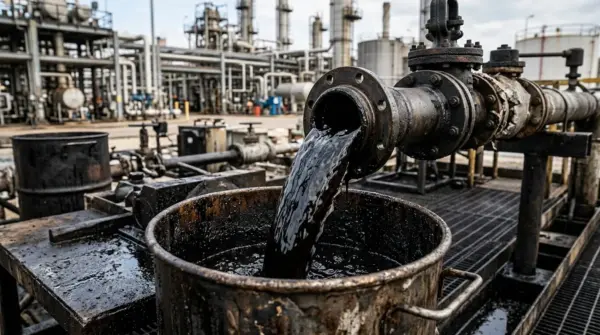
The Strait of Hormuz remains one of the most important issues for energy markets because a large share of global oil shipments traditionally passes through the waterway.
Vance said Iranian forces can still periodically strike commercial vessels in the strait, but he argued that they have largely been unable to prevent energy exports from continuing.
That distinction is important for oil traders.
Even when physical oil flows continue, the risk of disruption can increase shipping costs, insurance premiums and the geopolitical risk premium embedded in energy prices.
Why Energy Markets Are Watching the Talks
The conflict has already disrupted global energy markets, making the progress or failure of U.S.-Iran negotiations important for crude oil and refined products.
A durable agreement that reduces military risk around the region could potentially lower the geopolitical premium in oil prices.
Conversely, a breakdown in negotiations or a renewed escalation could increase concerns about energy supply disruptions and put upward pressure on crude and fuel prices.
Recent Reuters market coverage showed oil prices remaining above $100 a barrel amid geopolitical tensions, while the U.S. dollar also gained as investors responded to higher energy prices and broader market risks.
Want to understand market trends, price movements, and key factors shaping financial markets? Explore our latest Market Analysis for in-depth insights.
The War Is Costing Billions of Dollars Each Month
Vance said the war is costing around $3 billion per month, making the conflict an increasingly important economic and political issue in the United States.
Higher energy prices have also become a concern for consumers, particularly in states where transportation and energy costs have a significant effect on household expenses.
Vance discussed affordability and energy costs during a campaign appearance in Alaska before speaking with Reuters.
Vance Says He Has Not Decided on a 2028 Presidential Run
Vance also addressed speculation about his political future during the interview.
Asked whether he would seek the presidency in 2028, Vance said he had not made a decision.
His comments came during a campaign trip in Alaska, where he was supporting Republican Senator Dan Sullivan ahead of the November midterm elections.
However, the central focus of the Reuters interview was the war, the negotiations with Iran and Washington’s nuclear demands.
Want to stay informed about market performance, key developments, and the latest financial trends? Explore our Market Report for detailed market insights.
What Vance’s Comments Mean for Markets
For traders, the key development is that Washington is still demanding concrete nuclear concessions from Tehran before agreeing to an end to the war.
If negotiations make progress, the resulting reduction in geopolitical risk could put downward pressure on oil’s risk premium. If talks fail or military tensions increase, the opposite could occur, particularly if shipping through the Strait of Hormuz is affected.
The immediate market focus therefore remains on U.S.-Iran negotiations, Hormuz shipping conditions, crude prices and broader geopolitical risk.
Frequently Asked Questions
What did JD Vance say about Iran’s nuclear program?
Vance said Iran must make a meaningful reduction in its nuclear enrichment capacity to satisfy U.S. demands for an agreement to end the war.
What does the US want from Iran?
According to Vance, Washington wants concrete action to reduce Iran’s nuclear enrichment capacity rather than assurances about future reductions.
Are the US and Iran still negotiating?
Yes. Vance said the United States remains involved in discussions with Iranian President Masoud Pezeshkian and Foreign Minister Abbas Araqchi.
 Check Our
  Whether you’re a day trader or a long-term investor, FastPip gives you the tools to trade smarter, not harder.