Introduction
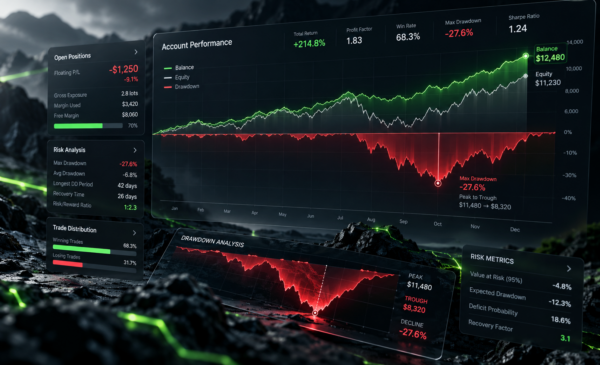
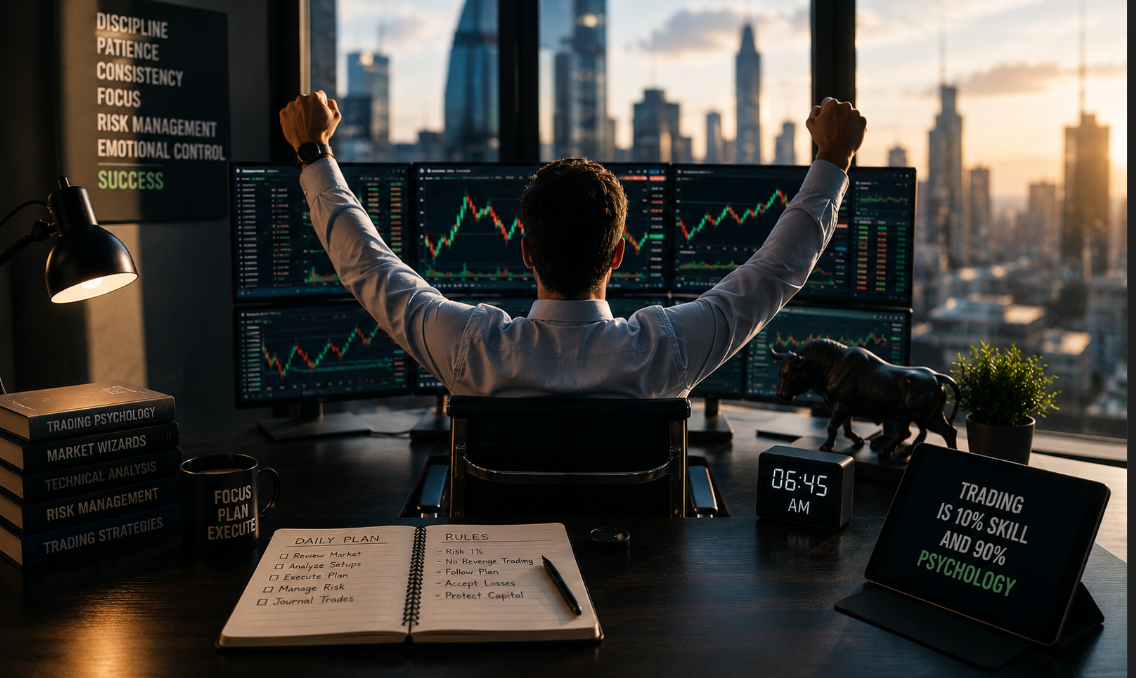
Best trading psychology tips are often the missing piece between traders who consistently make profits and traders who repeatedly lose money despite having strong technical knowledge. Many traders spend years learning technical analysis, indicators, price action, Smart Money concepts, and trading strategies, yet they continue to struggle emotionally when real money is on the line. The reason is simple: financial markets are not only a test of strategy. They are also a direct test of discipline, patience, emotional control, and mental stability.
In the Forex market, emotions can destroy even the best strategy within minutes. Fear can force traders to close winning positions too early. Greed can push traders to overtrade and ignore risk management rules. Revenge trading can turn a small daily loss into a catastrophic drawdown. Stress and impulsive behavior can cause traders to abandon their trading plans completely.
Professional traders understand something that beginners often ignore: successful trading is mostly psychological. Many institutional traders and hedge fund managers already know that controlling emotions is more important than finding the “perfect strategy.” In fact, two traders can use the exact same setup and produce completely different results simply because one trader has emotional discipline while the other does not.
Trading psychology directly affects decision-making. Every time the market moves aggressively, traders experience emotional pressure. During losing streaks, self-doubt appears. During winning streaks, overconfidence becomes dangerous. This emotional cycle is one of the main reasons why most retail traders fail to achieve consistent profitability.
The good news is that trading psychology can be trained and improved. Just like traders study charts and market structure, they can also train their mindset and emotional responses. By developing discipline, patience, emotional awareness, and strong risk management habits, traders can dramatically improve their long-term performance.
In this article, we will explore the best trading psychology tips that professional traders use to stay calm, disciplined, and profitable in highly volatile financial markets. Whether you trade Forex, Gold, indices, cryptocurrencies, or stocks, mastering trading psychology can completely transform your trading career.
Stay Updated With FastPip News and Market Analysis
To improve your trading decisions and stay informed about global financial events, make sure to follow the latest updates in the FastPip News Section. This section covers important Forex news, Gold analysis, economic events, central bank decisions, and professional market insights designed for traders who want to react faster to market movements. Whether you are a day trader, swing trader, or long-term investor, the FastPip news portal helps you monitor market sentiment and identify potential trading opportunities more
In addition to FastPip, professional traders also monitor major financial resources such as Investing.com for real-time market data, TradingView for advanced chart analysis and community ideas, and Forex Factory for economic calendars and high-impact news events. Using multiple trusted sources can help traders understand market sentiment, improve decision-making, and react more effectively during volatile market conditions.
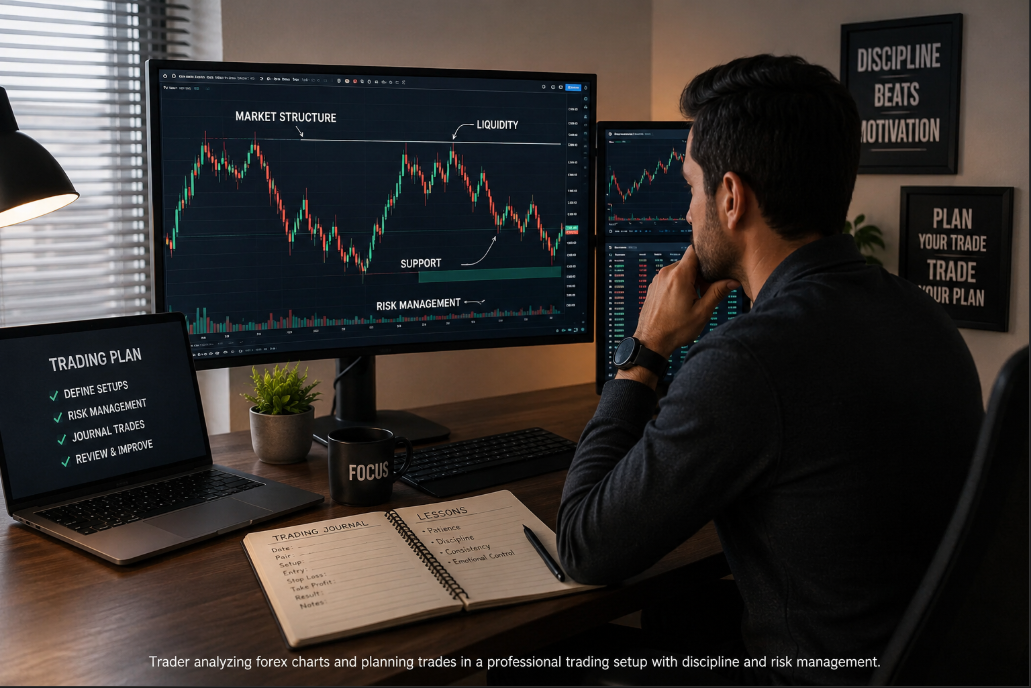
Why Trading Psychology Is More Important Than Strategy
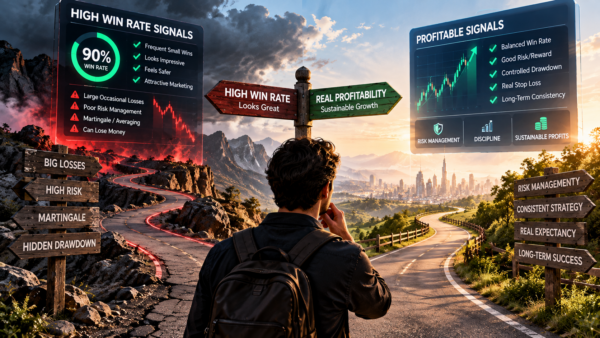
Many traders believe that profitability comes from discovering a secret indicator or a magical trading system. However, the reality is very different. Most trading failures happen because traders cannot consistently execute their strategy under emotional pressure.
A profitable strategy becomes useless when fear prevents execution. Likewise, a good risk management plan becomes meaningless when greed pushes traders to increase lot sizes impulsively. This is why trading psychology is often considered the foundation of consistent profitability.
Professional traders understand that losses are part of the business. They do not panic after one losing trade. Instead, they focus on long-term probability and consistency. Retail traders, on the other hand, often become emotionally attached to individual trades. This emotional attachment creates irrational behavior and destroys discipline.
Psychology controls how traders react during uncertainty. Markets constantly create emotional stress because outcomes are never guaranteed. Even the best setups can fail. Traders who cannot emotionally accept uncertainty usually struggle with consistency.
Strong trading psychology helps traders remain objective. Instead of reacting emotionally, disciplined traders follow their trading plan regardless of temporary market fluctuations. This emotional stability is what separates professional traders from emotional gamblers.
The Dangerous Role of Fear in Trading
Fear is one of the strongest emotions in financial markets. It affects nearly every trader at some point. Fear can appear in many forms, including fear of losing money, fear of missing out, fear of entering trades, and fear of holding positions during volatility.
One of the most common psychological mistakes is closing profitable trades too early. Traders become afraid that the market may reverse, so they exit positions before reaching their target. Over time, this destroys the risk-to-reward ratio and limits profitability.
Fear also causes hesitation. Many traders identify perfect setups but fail to enter because they are afraid of another loss. Ironically, this hesitation often causes traders to miss high-quality opportunities.
The fear of missing out, commonly known as FOMO, is another major issue. Traders see sudden market momentum and impulsively enter late trades without proper confirmation. Usually, these emotional entries happen near temporary tops or bottoms.
To overcome fear, traders must accept that losses are part of trading. No strategy wins 100% of the time. Professional traders focus on probability rather than perfection. They understand that long-term consistency matters more than individual trades.
Greed Can Destroy Trading Accounts Quickly
Greed is another major psychological challenge in trading. While fear makes traders cautious, greed pushes traders to become reckless. Greed often appears after winning streaks when traders begin to feel overconfident.
Overconfidence can lead to oversized positions, excessive leverage, and unnecessary risk exposure. Traders may start ignoring their rules because they believe they have “figured out the market.” This mindset is extremely dangerous.
Greed also causes traders to stay in positions longer than planned. Instead of respecting targets, they continuously expect larger profits. Eventually, market reversals erase gains and create frustration.
Many traders blow accounts because they become addicted to fast profits. Social media often worsens this problem by promoting unrealistic expectations about trading lifestyles and instant wealth.
The solution to greed is structure and discipline. Traders must define clear risk parameters before entering positions. A professional trader never changes targets emotionally during a trade.
Revenge Trading Is One of the Biggest Trading Killers
Revenge trading happens when traders attempt to recover losses emotionally instead of logically. After losing money, many traders immediately open new positions without proper analysis. Their goal is no longer disciplined execution. Their goal becomes emotional recovery.
This behavior often creates a destructive cycle. Emotional trades usually lead to additional losses, which then create even more emotional pressure. Eventually, traders lose control completely.
Revenge trading is especially dangerous after large losses or missed opportunities. Traders feel frustrated, angry, and impatient. Under emotional stress, decision-making quality drops dramatically.
Professional traders know when to stop trading. They understand that emotional stability is more important than forcing recovery. Sometimes the best decision is to step away from the charts completely.
Developing emotional awareness is critical. Traders must recognize when emotions begin influencing decisions. Taking breaks after stressful trading sessions can help restore objectivity and prevent impulsive actions.
Risk Management Reduces Emotional Pressure
One of the best trading psychology tips is understanding that proper risk management directly improves emotional control. Traders who risk too much money experience stronger emotional reactions because the financial consequences become overwhelming.
When position sizes are too large, every market movement creates stress. Traders become emotionally attached to trades and lose objectivity. Small fluctuations suddenly feel catastrophic.
Professional traders usually risk a small percentage of their capital per trade. This approach allows them to remain calm even during losing streaks. Lower emotional pressure improves decision-making quality significantly.
Good risk management also protects confidence. Large drawdowns can damage a trader’s psychological stability for months. Controlled risk exposure helps maintain consistency and emotional balance.
Risk management is not only about protecting money. It is also about protecting mental capital.
Building Discipline Through Trading Routines
Consistency in trading often comes from routines rather than motivation. Professional traders usually follow structured daily habits that reduce emotional decision-making.
A strong trading routine may include market preparation, economic calendar analysis, journaling, reviewing previous trades, and defining clear trading scenarios before the session begins.
Routines reduce impulsive behavior because traders already know exactly what conditions they are waiting for. This prevents emotional overtrading and random market participation.
Discipline is built gradually through repetition. Traders who consistently follow structured routines usually develop stronger emotional stability over time.
Successful traders treat trading like a professional business, not entertainment or gambling.
Why Trading Journals Improve Psychology
A trading journal is one of the most powerful psychological tools in trading. Many traders only focus on profits and losses, but journals help identify emotional patterns behind trading decisions.
By documenting emotions, thoughts, and mistakes, traders can recognize recurring psychological weaknesses. For example, traders may discover that they overtrade after winning streaks or hesitate after recent losses.
Trading journals create accountability. Instead of blaming the market, traders begin analyzing their own behavior objectively.
Journals also improve confidence because traders can review successful trades and identify strengths in their process.
Over time, journaling helps traders transition from emotional reactions to data-driven self-improvement.
Patience Is a Professional Trading Skill
Most retail traders lose money because they trade too frequently. They constantly feel the need to participate in the market, even when no high-quality setup exists.
Professional traders understand that patience is part of profitability. They wait for favorable conditions instead of forcing trades.
Patience reduces emotional exhaustion. Constant trading increases stress and decision fatigue. Waiting for high-probability setups improves both performance and psychological stability.
The market will always provide new opportunities. Traders who chase every movement often become emotionally drained and inconsistent.
Learning to stay out of the market is sometimes more important than learning how to enter trades.
Social Media Can Damage Trading Psychology
Modern trading culture on social media creates unrealistic expectations. Many influencers display luxury lifestyles, unrealistic profits, and manipulated trading results. This environment increases emotional pressure for traders.
Constant comparison creates frustration and impatience. Traders may begin taking unnecessary risks to achieve unrealistic returns quickly.
Social media also encourages overtrading because traders constantly feel they are missing opportunities.
Professional traders usually focus on their own process rather than external validation. Long-term profitability requires emotional independence and realistic expectations.
The goal of trading is consistency, not social media attention.
Accepting Losses Is Essential for Long-Term Success
Many traders emotionally resist losses. They treat losing trades as personal failures rather than normal business expenses.
However, losses are unavoidable in financial markets. Even elite hedge funds experience drawdowns and losing periods.
Emotionally mature traders accept losses calmly because they understand probability. Their confidence comes from long-term edge execution, not individual outcomes.
Trying to avoid all losses usually leads to bigger mistakes, including moving stop losses, averaging down, or refusing to exit losing positions.
Acceptance creates emotional freedom. Traders who accept uncertainty usually perform more consistently under pressure.
The Importance of Emotional Detachment
Emotional attachment to trades creates biased thinking. Traders begin hoping instead of analyzing objectively.
Professional traders separate emotions from execution. They understand that markets are not personal. The market does not care about opinions, emotions, or expectations.
Detachment allows traders to exit losing positions quickly and manage winners rationally.
One effective method is focusing on process rather than money. Traders who obsess over profits often become emotional. Traders who focus on execution quality usually remain calmer.
Emotional detachment improves consistency because decisions become rule-based instead of emotionally reactive.
Sleep, Health, and Physical Energy Affect Trading Psychology
Many traders underestimate the relationship between physical health and trading performance. Poor sleep, unhealthy diets, and lack of exercise can dramatically reduce emotional stability.
Fatigue weakens discipline and increases impulsive behavior. Stress hormones also affect decision-making quality during volatile market conditions.
Professional performance requires physical energy and mental clarity. Traders who maintain healthy routines usually handle emotional pressure more effectively.
Trading psychology is not isolated from overall lifestyle. Mental performance depends heavily on physical condition.
Confidence Must Be Built Slowly
Confidence in trading should come from experience and disciplined execution, not temporary profits.
Many traders become overconfident after short winning streaks. This false confidence often leads to reckless risk-taking and emotional mistakes.
Real confidence develops slowly through repetition, journaling, and long-term consistency.
Professional traders trust their process because they have tested it extensively over time.
Confidence without discipline becomes dangerous. Discipline without confidence creates hesitation. Successful traders develop both together gradually.
Avoiding Information Overload
Modern traders consume massive amounts of information daily, including news, indicators, social media opinions, economic forecasts, and trading signals.
Too much information creates confusion and emotional instability. Traders begin second-guessing their decisions constantly.
Professional traders usually simplify their process. They focus only on information that directly supports their strategy.
Clarity improves emotional control. Simplicity reduces psychological stress and decision fatigue.
Developing a Long-Term Trading Mindset
Many beginners approach trading with short-term expectations. They want immediate profits and fast financial freedom.
This mindset creates emotional pressure and unrealistic behavior. Traders become impatient and take excessive risks trying to accelerate results.
Professional traders think long-term. They focus on survival, consistency, and gradual improvement.
Trading is a performance skill that requires years of emotional development. Sustainable profitability comes from discipline, not shortcuts.
Why Self-Awareness Is Critical in Trading
Self-awareness allows traders to recognize emotional triggers before they become destructive.
Some traders become impulsive after losses. Others become greedy after wins. Some traders struggle with boredom trading or FOMO.
Understanding personal emotional tendencies is essential for improvement.
The best traders are not emotionless. They are emotionally aware and disciplined.
Self-awareness creates control. Without awareness, emotions unconsciously dominate trading decisions.
Meditation and Mental Training for Traders
Many professional traders use meditation, breathing exercises, and mindfulness techniques to improve emotional stability.
Meditation helps reduce stress and improve concentration during volatile market conditions.
Mental training also improves patience and reduces impulsive reactions.
Trading performance is heavily connected to mental state. Calm traders usually make better decisions than emotionally reactive traders.
Psychological training should be treated as seriously as technical analysis training.
The Market Rewards Emotional Stability
Financial markets constantly punish emotional extremes. Panic selling, euphoric buying, impulsive revenge trading, and emotional overconfidence all create poor outcomes.
The market rewards discipline, patience, and consistency instead.
Professional traders understand that emotional stability is a competitive advantage. Many retail traders fail not because of intelligence, but because of emotional instability.
Mastering trading psychology allows traders to execute strategies consistently even during stressful market environments.