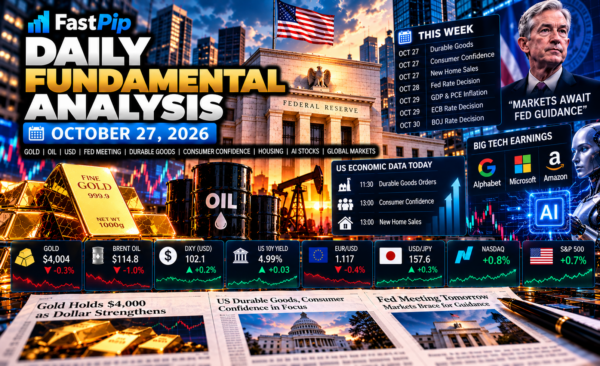
Gold prices edged lower on Tuesday as a firmer US dollar weighed on bullion, while investors awaited the Federal Reserve’s policy decision for fresh guidance on the outlook for interest rates.
Spot gold fell 0.2% to $4,007.29 per ounce by 0321 GMT, while US gold futures for December delivery declined 0.5% to $4,019.70.
The US dollar held near a one-week high, making dollar-priced gold more expensive for buyers using other currencies and reducing its appeal in international markets.
Gold Consolidates After Last Week’s Sharp Decline
Gold was trading within Friday’s range after suffering a significant sell-off last week, according to Ilya Spivak, head of global macro at Tastylive.
Spivak warned that a break below $3,900 could open the door to a further decline, potentially bringing the $3,800 area into focus.
Bullion fell below the $4,000-per-ounce threshold for the first time since mid-July last week. It also recorded a weekly loss of 4%, its steepest decline in approximately four months.
Higher energy prices fueled concerns about inflation and strengthened expectations that US interest rates could remain elevated or rise further, putting additional pressure on gold.
Fed Decision and Inflation Data in Focus
Investors are now focused on the Federal Reserve’s policy decision on Wednesday, followed by the US Personal Consumption Expenditures (PCE) price index on Thursday. The PCE index is the Fed’s preferred inflation gauge as the central bank seeks to achieve a 2% inflation target.
Federal Reserve policymakers have indicated that they are unlikely to raise short-term borrowing costs at this week’s meeting. However, persistent inflation concerns have left investors questioning whether a pause in rate increases will last.
According to the CME FedWatch Tool, traders were pricing in an approximately 11% probability of a rate hike this week and an 82% probability of an increase in December.
These figures reflect market expectations rather than confirmed policy decisions. The upcoming Fed announcement and inflation data could influence how investors assess the outlook for interest rates.
Why Higher Interest Rates Can Weigh on Gold
Gold is often viewed as a hedge against inflation, but it does not generate interest income. When interest rates rise, interest-bearing assets can become more attractive relative to bullion, increasing the opportunity cost of holding gold.
A stronger US dollar can also pressure gold prices because bullion is denominated in dollars. When the dollar strengthens, gold becomes more expensive for buyers using other currencies, potentially reducing demand.
The combination of a firmer dollar and expectations of higher US interest rates has therefore created a challenging backdrop for gold as markets approach the Fed decision.
Geopolitical Developments and Precious Metals
On the geopolitical front, the Saudi-led coalition in Yemen said on Tuesday that it had intercepted and destroyed three ballistic missiles and drones launched by the Houthis toward two regions of Saudi Arabia.
Elsewhere in the precious metals market, prices also moved lower.
Spot silver declined 0.7% to $53.53 per ounce, platinum fell 0.8% to $1,514.16, and palladium dropped 1.5% to $1,034.75.
Market Impact: Key Levels and Events to Watch
Gold remains sensitive to changes in US interest rate expectations and movements in the dollar. The Federal Reserve’s policy announcement and the upcoming PCE inflation report are the key events investors are watching for further direction.
From a price perspective, the $3,900 level is important in the outlook outlined by Tastylive’s Ilya Spivak. A break below that level could expose gold to a potential move toward $3,800, although this remains a scenario rather than a confirmed outcome.
If inflation data or Fed communication reinforces expectations of higher interest rates, gold could face additional pressure. Conversely, developments that weaken the dollar or reduce rate-hike expectations could alter the market outlook.
Frequently Asked Questions
Why is gold falling ahead of the Fed decision?
Gold has come under pressure from a firmer US dollar and concerns that persistent inflation could keep interest rates elevated or lead to further increases.
What gold price levels are traders watching?
Tastylive’s Ilya Spivak identified $3,900 as a key level to watch. A break below it could potentially bring the $3,800 area into focus.
Could the Federal Reserve raise interest rates in December?
According to the CME FedWatch Tool figures cited in the report, markets were pricing in an 82% probability of a December rate increase. This is a market-implied probability, not a confirmed Fed decision.
Why do higher interest rates tend to weigh on gold?
Gold does not pay interest. Higher rates can make interest-bearing assets more attractive and increase the opportunity cost of holding bullion.
What happened to silver, platinum and palladium?
Spot silver fell 0.7% to $53.53 per ounce, platinum declined 0.8% to $1,514.16, and palladium dropped 1.5% to $1,034.75.
 Check Our
 Whether you’re a day trader or a long-term investor, FastPip gives you the tools to trade smarter, not harder.