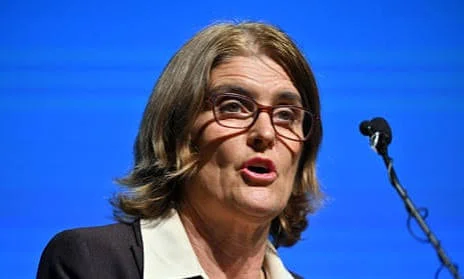
European Central Bank President Christine Lagarde told the European Parliament’s Committee on Economic and Monetary Affairs that artificial intelligence could transform Europe’s productivity, investment and labour markets, while also creating new challenges for inflation and monetary policy.
Speaking at the committee’s regular hearing, Lagarde said companies are expected to devote around 10% of total investment to AI in 2026, while AI-related borrowing already represents roughly one-quarter of credit growth to firms.
She said Europe has a significant opportunity to use AI to improve productivity, competitiveness and living standards, but stressed that the benefits will depend on how quickly the technology is adopted and how effectively Europe manages the associated economic and financial risks.
Euro Area Economy Remains Resilient
Lagarde said the euro area economy has remained resilient despite the impact of the energy shock, with solid real GDP growth recorded in the second quarter of 2026.
Growth has been broad-based across most countries and sectors, and the ECB expects this momentum to have continued into the third quarter.
Manufacturing has benefited from higher government spending on defence and infrastructure, while a recovery in consumer confidence from the weak levels recorded in spring has supported the services sector.
At the same time, AI-related activity is increasingly visible across digital services, business investment and exports.
The labour market has also remained relatively strong. Euro area unemployment stood at 6.4% in July, although the pace of employment and labour-force growth has started to slow.
Productivity, meanwhile, has gradually improved.
The ECB’s September projections see the euro area economy growing by 0.9% in 2026, 1.4% in 2027 and 1.5% in 2028. The official ECB projections published in September contain the same growth path.
Further developments in the European economy can be followed through Macroeconomic News.
Eurozone Inflation Rises as Energy Costs Increase
Inflation remains one of the ECB’s central concerns.
Headline inflation increased to 3.2% in August, compared with 2.9% in July. Energy inflation rose sharply to 14.3% from 10.3%, with higher refining margins on liquid fuels and increased energy commodity prices contributing to the move.
Food inflation moved in the opposite direction, declining slightly to 1.1% from 1.2%.
Inflation excluding energy and food also edged lower, reaching 2.4%, mainly because services inflation declined, although this was partly offset by higher goods inflation.
Lagarde noted that wages have not yet shown a significant response to the energy shock. Compensation per employee, a measure of nominal wage growth, was 3.3% in the second quarter, down from 3.6% in the first quarter.
The latest ECB projections put average headline inflation at 3.0% in 2026, 2.5% in 2027 and 2.1% in 2028. Inflation excluding energy and food is projected at 2.5% in 2026, 2.6% in 2027 and 2.3% in 2028.
ECB Raises Interest Rates by 25 Basis Points
Against this inflation backdrop, the ECB has maintained a restrictive policy stance.
At its September monetary policy meeting, the Governing Council raised all three key ECB interest rates by 25 basis points. The official decision put the deposit facility rate at 2.50%, the main refinancing rate at 2.65%, and the marginal lending facility at 2.90%, effective from September 16.
Lagarde explained that the ECB does not respond mechanically to changes in energy prices themselves. Instead, policymakers assess whether higher energy costs are becoming embedded in broader inflation.
She identified three key criteria guiding the ECB’s assessment:
- The inflation outlook and the risks surrounding it
- Underlying inflation dynamics, including the transmission of energy costs into prices and wages
- Monetary-policy transmission, including the effect of interest rates on borrowing costs and economic growth
According to Lagarde, inflation is expected to remain higher than previously anticipated in 2027 and 2028, mainly because of higher energy prices.
However, she said there is currently no evidence that the energy shock has generated a significant increase in wages.
At the same time, long-term interest rates have risen notably since the previous ECB meeting, which is expected to slow economic growth and reduce the pass-through of higher energy costs into the wider economy.
The ECB therefore continues to pursue what Lagarde described as a measured response to the shock.
The latest official ECB communication similarly states that monetary-policy decisions will remain data-dependent and that the Governing Council is not pre-committing to a particular rate path.
More ECB decisions and central-bank developments can be followed through Central Banks.
AI Could Change the Inflation Outlook
Lagarde devoted a significant part of her speech to artificial intelligence and its potential macroeconomic consequences.
She said AI could transform production processes, business models and economic structures, but its overall effect on the economy remains uncertain.
Two channels are particularly important for monetary policy: productivity and investment, and labour markets and income distribution.
AI, Productivity and Investment
AI could allow companies to produce more efficiently. Over time, higher productivity could reduce production costs and therefore ease inflationary pressures.
However, the scale and speed of this effect will depend on how widely AI is adopted across the economy.
According to a recent ECB survey cited by Lagarde, 38% of euro area companies reported at least moderate use of AI by late 2025, while only 7% reported significant use.
Lagarde said unlocking the full potential of AI will require substantial investment not only in software and innovation, but also in computing capacity, data centres and energy infrastructure.
Companies will also need to redesign business processes and train employees to work effectively with the technology.
Europe’s AI-related investment is increasing, but it remains behind the United States.
European initiatives such as InvestAI and the Scaleup Europe Fund could help mobilise additional capital for AI infrastructure. Lagarde also pointed to plans for €30 billion in AI Gigafactories as part of Europe’s effort to develop advanced AI capacity.
AI Investment Could Also Create Financial Risks
The ECB President also highlighted risks surrounding the rapid expansion of AI-related investment.
Global equity valuations have become concentrated in a relatively small group of AI-related companies, while some of those companies are simultaneously increasing their debt financing.
A sharp reassessment of AI companies’ growth prospects or the sustainability of their debt could therefore lead to market corrections.
Such a correction could extend beyond the technology sector and affect European investors and the wider economy.
This means that AI is becoming relevant not only to productivity and inflation, but also to financial conditions and market stability.
For traders, developments in AI-related equity valuations and financing conditions may therefore become an increasingly important component of broader Market Analysis.
AI Is Also Reshaping Europe’s Labour Market
The second major channel highlighted by Lagarde is the labour market.
AI is already changing the tasks workers perform and the skills companies require.
More than 50% of workers are already using AI in their jobs, while companies, on balance, continue to hire.
However, the employment effect depends on how businesses use AI.
Companies using AI to support research, innovation and the development of new products tend to continue hiring workers. By contrast, firms primarily using AI to reduce labour costs are more likely to reduce employment.
The longer-term question is whether AI will mainly complement workers or replace them.
That distinction could have significant implications for household incomes, consumer demand and, ultimately, inflation.
Lagarde noted that previous major technological advances did not lead to an overall reduction in employment, but she said it remains uncertain whether AI will follow the same historical pattern.
Europe Faces Three Priorities for AI
Lagarde outlined three broad priorities for Europe if the region wants to capture the economic benefits of AI while maintaining technological sovereignty.
Innovation
Europe needs large and integrated markets, deeper capital markets, sufficient computing capacity, skilled workers and affordable energy.
Reducing fragmentation in the Single Market and improving investment conditions could help European companies scale AI technologies more effectively.
Independence
Europe should strengthen parts of the AI supply chain that remain underdeveloped.
The goal, according to Lagarde, is not complete self-sufficiency, but ensuring that critical functions can continue operating under different circumstances.
Europe also needs a meaningful position in the global AI value chain for both economic and strategic reasons.
Intensive AI Adoption
AI adoption needs to spread beyond a relatively small group of technology leaders.
However, Lagarde stressed that simple adoption is not enough. Companies must also use AI effectively and at scale.
That will require retraining programmes and measures to address shortages of AI-related skills.
What Lagarde’s Speech Means for Financial Markets
Lagarde’s comments reinforce the importance of the ECB’s inflation outlook for the euro.
With euro area inflation still above the ECB’s 2% target and energy prices generating additional pressure, monetary-policy expectations remain an important driver for the euro and European bond yields.
At the same time, the ECB’s assessment that the energy shock has not yet produced a significant wage response reduces evidence of a broader second-round inflation spiral.
For EUR/USD, the key market variable remains the relative path of ECB and Federal Reserve policy expectations. A more persistent European inflation outlook can support expectations for tighter ECB policy, while signs of weaker growth or declining underlying inflation can have the opposite effect.
AI creates a separate, longer-term market channel. Stronger productivity and investment could support European growth over time, while excessive valuations or debt concentration in AI-related companies could create financial-market volatility if investor expectations change sharply.
Key Takeaways From Lagarde’s Speech
- Euro area economic growth has remained resilient despite the energy shock.
- Eurozone headline inflation rose to 3.2% in August.
- Energy inflation increased sharply to 14.3%.
- The ECB raised its three key interest rates by 25 basis points in September.
- The ECB’s inflation target remains 2% over the medium term.
- The ECB expects headline inflation to average 3.0% in 2026 and 2.5% in 2027.
- AI could improve productivity and reduce inflationary pressures over the long term.
- AI could also significantly reshape employment and income distribution.
- Rapid growth in AI investment and debt financing creates potential financial-market risks.
- Europe needs greater AI innovation, technological independence and broader adoption.
Conclusion
Christine Lagarde’s latest European Parliament hearing highlighted the increasingly close relationship between monetary policy, energy prices, inflation and technological change.
For the ECB, the immediate challenge remains preventing the energy shock from becoming embedded in broader inflation while avoiding an excessive slowdown in economic activity.
At the same time, artificial intelligence is becoming a structural economic issue. Its effects on productivity, investment, employment and financial markets could increasingly influence the economic environment in which the ECB sets monetary policy.
Market Impact
Lagarde’s message reinforces a hawkish monetary-policy backdrop for the euro because inflation remains above the ECB’s 2% target and the central bank has already raised rates by 25 basis points. However, the ECB is also highlighting resilient growth and the absence so far of a significant wage response to the energy shock. For Forex, the key transmission channel is therefore ECB rate expectations → European yields → EUR, while AI-related investment and productivity represent a longer-term growth factor rather than an immediate trading catalyst.
Frequently Asked Questions
What did Christine Lagarde say about ECB interest rates?
Lagarde explained that the ECB’s response to higher energy prices remains measured and is based on inflation expectations, underlying inflation dynamics and monetary-policy transmission.
Why did the ECB raise interest rates?
The ECB raised its three key rates by 25 basis points as inflation was expected to remain above its 2% target for an extended period.
What is the ECB’s inflation target?
The ECB aims to stabilise inflation at 2% over the medium term.
 Check Our
  Whether you’re a day trader or a long-term investor, FastPip gives you the tools to trade smarter, not harder.