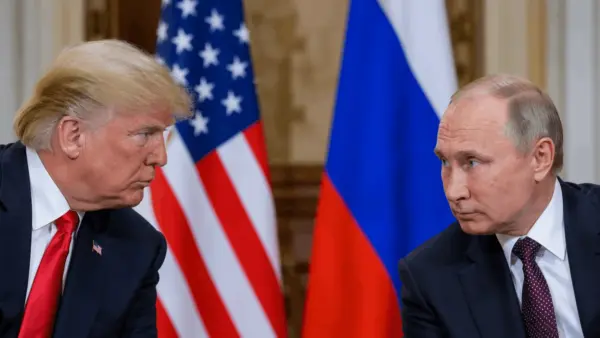
The United States and China have agreed on a reciprocal tariff-reduction arrangement covering $30 billion of non-sensitive goods in each direction, while also establishing a new dialogue on artificial intelligence following Chinese President Xi Jinping’s three-day visit to Washington.
The agreement marks another step toward stabilizing economic relations between the world’s two largest economies, although the latest developments do not represent a comprehensive resolution of their broader trade disputes.
The tariff recommendations would cover a range of U.S. exports to China, including agricultural products, wood and cosmetics, while U.S. imports from China would include products such as small appliances, toys and decorations, according to the White House.
US and China Agree on $30 Billion Tariff Reductions
Under the agreement, Washington and Beijing reached consensus on recommendations for more favorable tariff treatment for approximately $30 billion of goods in each direction.
The measures are focused on non-sensitive products and cover goods traded between the two economies.
| Direction | Examples of goods |
|---|---|
| U.S. exports to China | Agricultural goods, wood, cosmetics |
| Chinese exports to the U.S. | Small appliances, toys, decorations |
| Value covered | About $30 billion in each direction |
The two sides also agreed to establish a U.S.-China trade council, providing a formal channel for discussing bilateral trade issues and market-access concerns.
The agreement builds on earlier negotiations in Kuala Lumpur and follows the decision by Washington and Beijing to extend their existing trade truce by two months beyond its previously scheduled November 10 expiry. The extension provides additional time for the two governments to work toward a broader economic agreement.
Want to stay updated on the latest market developments and events affecting financial markets? Explore our News section for the latest updates.
Trade Truce Provides More Time for Negotiations
The latest arrangement comes as both governments attempt to prevent another escalation in their trade relationship.
The three-day meeting between Xi Jinping and U.S. President Donald Trump emphasized continued diplomatic engagement rather than producing a comprehensive settlement of all outstanding disputes.
The extension of the trade truce is particularly important for businesses because it reduces the immediate risk of another round of tariff escalation while negotiations continue.
However, the agreement should not be interpreted as the end of the U.S.-China trade conflict. Both countries continue to have significant differences over trade, technology, supply chains and strategic industries.
The recent progress instead creates additional time for negotiators to address those issues through established channels. Reuters reported that the two sides are also continuing work on areas covered by previous agreements.
Looking to deepen your trading knowledge and explore practical insights about financial markets? Visit our Blog for useful guides, strategies, and market insights.
Washington and Beijing Launch New AI Dialogue
Trade was not the only major issue discussed during Xi’s visit.
The United States and China also agreed to establish a dialogue focused on artificial intelligence, including discussions about the risks and benefits associated with rapidly developing AI technologies.
The two countries are expected to hold another round of discussions in November. They also agreed to establish a communication mechanism for AI-related incidents, creating a channel through which the two sides can address potential problems connected to the technology.
The agreement does not mean that Washington and Beijing have abandoned their competition over advanced technology. The United States continues to emphasize maintaining its technological advantage, while China is also investing heavily in AI development.
Instead, the dialogue creates a mechanism for communication on an area that carries growing economic and strategic importance.
Trump and Xi Discuss Wider Global Issues
The two leaders also discussed broader international issues during the summit.
The United States and China agreed to support each other as hosts of major international gatherings, including the Asia-Pacific Economic Cooperation (APEC) meeting and the G20 summit.
Both sides also addressed geopolitical issues involving Iran and international waterways. According to statements from the two governments, they agreed that Iran should meet its commitments concerning nuclear weapons and that no country or institution should impose transit tolls on international waterways.
These issues add a broader geopolitical dimension to the summit beyond trade and technology.
What the US-China Agreement Means for Global Trade
The latest agreement could reduce some immediate uncertainty surrounding the trade relationship between Washington and Beijing.
For companies that depend on cross-border supply chains, lower tariffs on selected goods could reduce some trade costs and make planning easier while negotiations continue.
However, the overall effect will depend on how the tariff recommendations are implemented and whether the two governments make further progress on their wider trade disagreements.
The establishment of a trade council is also significant because it provides a formal framework for continued discussions rather than relying solely on high-level meetings between the two presidents.
For investors, the key issue will therefore be whether the latest measures lead to further de-escalation or remain limited to selected areas of bilateral trade.
What Traders Should Watch Next
Markets will likely focus on several developments following the summit:
- Implementation of the $30 billion tariff arrangement
- Further U.S.-China trade negotiations
- The November AI dialogue
- Any changes to the existing trade truce
- Developments involving Chinese exports and U.S. imports
- USD/CNY price movements
- Chinese and U.S. equity markets
- Changes in global risk sentiment
The continuation of negotiations is particularly important because a renewed escalation in tariffs could reverse some of the reduction in trade uncertainty created by the latest agreement.
Market Impact
The agreement is generally relevant to risk sentiment, equities and currencies because lower tariff barriers can reduce immediate concerns about global trade disruption. Continued progress could support risk-sensitive assets and reduce some pressure on China-related markets, while the Chinese yuan and USD/CNY may remain sensitive to further trade announcements. However, the market impact will depend heavily on implementation and whether the agreement leads to additional de-escalation rather than a temporary pause in U.S.-China tensions.
Conclusion
The United States and China have agreed to pursue more favorable tariff treatment for $30 billion of non-sensitive goods in each direction and to establish a new dialogue on artificial intelligence.
The two countries have also agreed to establish a trade council and continue the outcomes of previous negotiations while their broader trade truce remains in place.
The measures represent further engagement between Washington and Beijing, but they do not resolve the wider disputes between the two economies. For financial markets, the next key signals will come from the implementation of the tariff arrangements, future trade negotiations and the November AI discussions.
Frequently Asked Questions
What did the US and China agree on?
The two countries agreed on recommendations for more favorable tariff treatment covering approximately $30 billion of non-sensitive goods in each direction and agreed to launch a dialogue on artificial intelligence.
Which goods are covered by the tariff agreement?
Examples include U.S. agricultural goods, wood and cosmetics, as well as Chinese small appliances, toys and decorations.
Is the US-China trade war over?
No. The agreement represents further trade engagement and a reduction in some tariff-related uncertainty, but broader economic and strategic differences remain.
 Check Our
  Whether you’re a day trader or a long-term investor, FastPip gives you the tools to trade smarter, not harder.