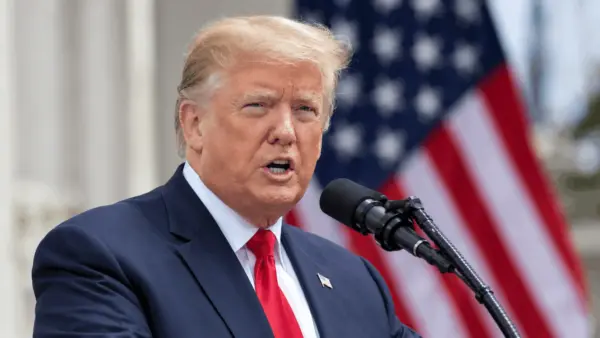
The United States and China advanced several trade, investment, energy and technology initiatives during President Donald Trump’s state visit with Chinese President Xi Jinping, according to a White House fact sheet.
The discussions covered bilateral trade, investment, critical minerals, energy supply chains, fentanyl precursor chemicals and advanced artificial intelligence technologies. The two countries also agreed to establish new mechanisms for continued economic and technology dialogue.
U.S.-China Board of Trade Moves Into Operation
A central outcome of the visit was the operationalization of the U.S.-China Board of Trade, which was chartered during the May 2026 summit in Beijing.
According to the White House, the two sides reached consensus on recommendations for more favorable tariff treatment covering $30 billion of non-sensitive goods in each direction.
The Board of Trade also launched a working group focused on market-access barriers in the agricultural sector.
Goods Covered by the Trade Discussions
For U.S. exports to China, the categories listed by the White House include agricultural products, fish and seafood, logs and wood products, cosmetics and medical devices.
Products identified for U.S. imports include consumer goods such as small appliances, toys, holiday decorations and children’s car seats.
Traders can monitor the latest market developments and potential price implications through Market Analysis.
China to Import at Least 10 Million Metric Tons of U.S. Coal
The White House said China will import at least 10 million metric tons of U.S. coal in 2027 and again in 2028, following the Trump administration’s efforts to revive the U.S. coal industry.
The commitment is relevant to the broader U.S.-China commodity relationship because energy trade can influence supply chains, industrial activity and global commodity flows.
U.S.-China Board of Investment Established
The two countries also established the U.S.-China Board of Investment.
Its stated mission is to discuss potential investment opportunities, investment-related barriers and commercially meaningful issues between the two countries. The mechanism is intended to provide a structured channel for bilateral discussions involving investment.
For businesses and investors, the development adds another formal mechanism for discussing cross-border investment conditions between the world’s two largest economies.
Rare Earths and Critical Minerals Remain a Key Issue
Supply-chain concerns surrounding rare earths and other critical minerals remain part of the U.S.-China economic discussions.
According to the White House, the two countries continue working on U.S. concerns regarding shortages and shipment levels, with the stated goal of returning deliveries to appropriate levels.
Rare earths and critical minerals are strategically important because they are used across advanced manufacturing, electronics, energy technologies and other industrial applications. Changes in their availability can therefore have implications beyond bilateral trade.
Fentanyl Precursors and Chemical Controls
The White House also highlighted China’s scheduling of substances associated with illicit drug production and noted new Chinese export controls covering two fentanyl precursor chemicals.
The United States encouraged China to permanently schedule these and other substances and chemicals as part of efforts to limit the flow of illicit precursor materials into North America.
The White House further stated that, in August 2026, China arrested 21 Chinese citizens following information provided by U.S. law enforcement. The individuals were accused of manufacturing and distributing precursor chemicals to illicit drug producers in North America.
Trump Calls for Higher Refined Petroleum Production
President Trump also urged President Xi to increase China’s production of refined petroleum products in an effort to stabilize global supply.
Energy supply is an important factor for financial markets because changes in petroleum availability can affect fuel prices, inflation expectations, transportation costs and broader commodity-market conditions.
U.S.-China Cooperation on Super Intelligence
Technology was another area discussed during the state visit. The two countries agreed to use the term “Super Intelligence” (SI) rather than “artificial intelligence” for the relevant emerging technologies, according to the White House.
The countries also established the U.S.-China Super Intelligence Dialogue to exchange views on the risks and benefits associated with the technology. The next exchange is expected to take place by November 2026.
New Communication Channel for SI Incidents
Washington and Beijing also agreed to establish a bilateral communication channel for incidents involving Super Intelligence.
The mechanism creates an additional channel for communication as the two countries continue to compete and cooperate in advanced technology.
Trump and Xi Discuss Broader Global Issues
The leaders also discussed international issues involving Russia, North Korea and Iran.
According to the White House fact sheet, the two sides agreed that Iran should not obtain a nuclear weapon and discussed the principle that no country or institution should be allowed to impose tolls on international waterways.
The leaders also discussed cooperation around the G20 and APEC, with both countries supporting each other as hosts and expressing an intention to attend each other’s summits.
Potential Implications for Global Trade
The agreements announced during the visit create several areas for traders and investors to monitor, particularly around tariffs, commodities and supply chains.
The proposed treatment of $30 billion of non-sensitive goods in each direction could be relevant for bilateral trade flows if the recommendations are implemented. Meanwhile, the coal commitment adds a specific energy-trade component to the relationship, while continued discussions over rare earths remain important for industrial supply chains.
These developments should be distinguished from a comprehensive trade agreement: the White House fact sheet describes recommendations, mechanisms and commitments across specific areas rather than announcing a complete restructuring of U.S.-China trade relations.
What Traders Should Watch Next
- Implementation of the U.S.-China Board of Trade
- Actual trade flows involving the covered goods
- U.S. coal shipments to China
- Rare-earth and critical-mineral shipments
- Energy and refined petroleum markets
- Further tariff announcements
- The November 2026 Super Intelligence dialogue
Market Impact
The developments could influence USD, CNY, commodities and global risk sentiment through their potential effects on trade flows, energy supply and supply-chain conditions. For forex traders, the key variables to monitor are implementation of the trade measures, changes in U.S.-China growth expectations, commodity prices and any further escalation or easing in bilateral trade policy.
 Check Our
  Whether you’re a day trader or a long-term investor, FastPip gives you the tools to trade smarter, not harder.