Why Top Traders Don’t Sell Signals as Their Main Business
Why Top Traders Don’t Sell Signals as Their Main Business
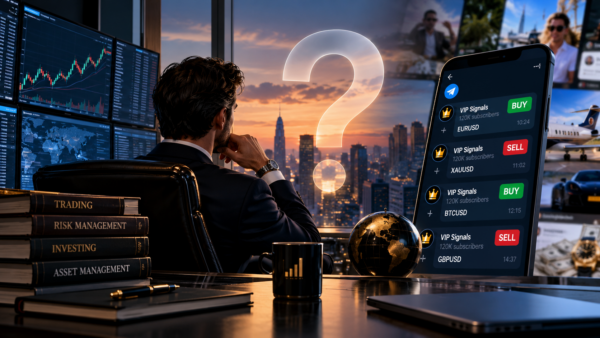
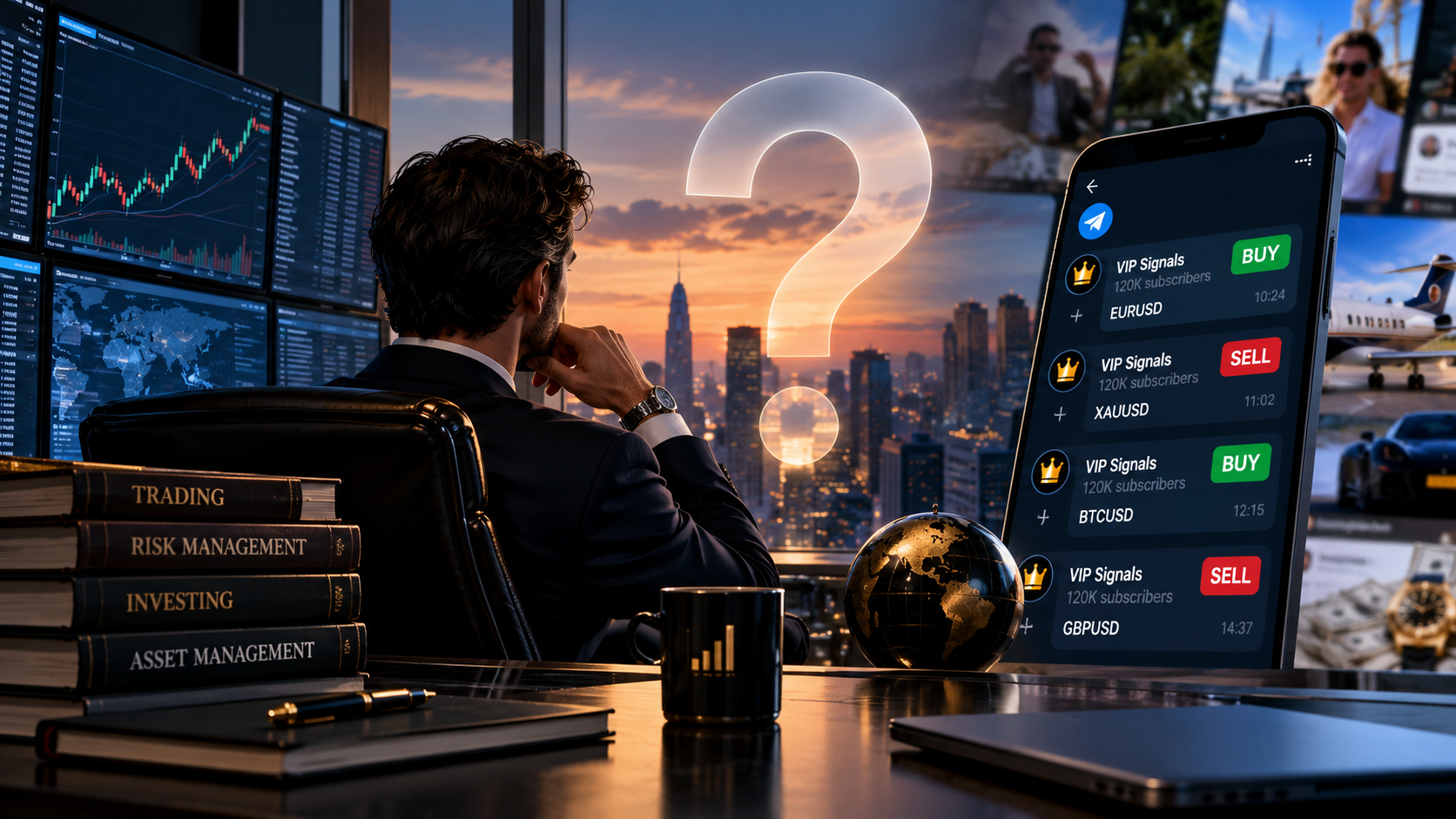
Open almost any social media platform and you will find traders selling signals.
Telegram channels advertise daily entries.
Instagram pages promote extraordinary win rates.
Some services promise exclusive VIP trades, high accuracy, or returns that appear almost effortless.
This creates an obvious question:
If selling trading signals is such an attractive business, why are many of the world’s most successful traders better known for trading, investing, hedge funds, and asset management rather than selling signals to retail traders?
That question is at the heart of understanding why top traders don’t sell signals as their primary business.
The answer is more nuanced than saying:
“Anyone who sells signals cannot trade.”
That statement is too simplistic.
There are skilled analysts and profitable traders who legitimately provide signals, research, education, or market commentary.
The real difference is usually the business model.
At the highest professional level, traders often have access to ways of monetizing their skill that can scale far beyond monthly retail subscriptions.
These may include:
- Trading their own capital
- Managing outside capital
- Hedge funds
- Proprietary trading
- Asset management
- Performance fees
- Investment businesses
- Long-term investments
Understanding this distinction can help traders evaluate signal providers much more intelligently.
The important question is not simply:
“Does this person sell signals?”
The better question is:
“Where does this person’s credibility actually come from—verified market performance or marketing ability?”
Why This Question Matters
The signal industry creates an unusual contrast.
On one side, social media is filled with people claiming:
- 90% accuracy
- Daily profits
- Extremely high returns
- Professional trading expertise
On the other side, many legendary market professionals became famous because of:
- Fund performance
- Investment results
- Risk management
- Trading records
- Capital allocation
—not because they built large retail signal channels.
That difference naturally creates skepticism.
If someone claims they can consistently generate extraordinary trading returns, traders may reasonably ask:
Why is selling subscriptions necessary?
But that question should not automatically lead to the conclusion that every signal provider is fraudulent.
Instead, it should encourage deeper due diligence.
Where Do Professional Traders Actually Make Money?
To understand why top traders don’t sell signals as their main business, start with the economics of professional trading.
A successful trader can potentially earn from several sources.
1. Trading Their Own Capital
The most direct model is simple:
A trader risks personal capital and earns money through trading performance.
Suppose a skilled trader operates:
$100,000
A strong annual return may produce meaningful income.
Now imagine that trader eventually controls:
$10 million
The economics change dramatically.
At larger scale, generating returns on capital can become much more valuable than collecting small monthly subscriptions from retail users.
This is one reason successful traders often focus on capital growth.
2. Managing Other People’s Capital
Professional traders may eventually manage capital for:
- Private investors
- Institutions
- Investment funds
- Family offices
- Asset-management firms
Instead of selling individual BUY and SELL instructions, they manage an investment process.
Their compensation may include:
- Management fees
- Performance fees
- Profit participation
This creates a fundamentally different business model from retail signal subscriptions.
3. Hedge Funds and Investment Firms
Many well-known professional traders have built or worked within investment organizations.
At that level, the work extends beyond sending trade recommendations.
It may involve:
- Research teams
- Portfolio construction
- Risk management
- Execution
- Capital allocation
- Investor relations
- Compliance
- Operational infrastructure
The objective is not to generate one isolated signal.
The objective is to manage an entire portfolio.
4. Proprietary Trading
Some traders operate with capital provided by trading firms or financial institutions.
Their income may be linked directly to trading performance.
Again, the economic incentive is different from building a retail subscriber base.
Why Scaling Capital Can Be More Attractive Than Scaling Subscribers
This is one of the clearest economic explanations.
Imagine two business models.
Model A — Signal Business
1,000 subscribers
$50 monthly subscription
Revenue:
$50,000 per month
This can certainly be a valuable business.
But maintaining it may require:
- Marketing
- Customer acquisition
- Customer support
- Content production
- Payment systems
- Community management
- Retention campaigns
Now consider a professional trader managing substantial capital.
If their skill can attract significantly larger assets under management, their economic upside may come directly from trading and performance fees.
They may prefer to spend time improving:
Trading + Risk Management + Capital Allocation
rather than:
Marketing + Support + Subscription Growth
This is an important reason why top traders don’t sell signals as their central activity.
Trading Skill and Marketing Skill Are Not the Same Thing
This distinction is essential.
A person can be excellent at social media marketing and mediocre at trading.
Another person can be an exceptional trader and have almost no interest in creating content.
Online visibility therefore does not necessarily measure trading ability.
A signal seller with:
500,000 followers
is not automatically a stronger trader than someone with:
500 followers
or no social-media presence at all.
Marketing measures the ability to attract attention.
Trading measures the ability to manage uncertainty, risk and capital.
They are different skills.
Does Selling Signals Mean Someone Is a Bad Trader?
No.
This conclusion would be incorrect.
Selling signals is a business model.
A professional trader may legitimately decide to monetize:
- Research
- Analysis
- Market expertise
- Strategy development
- Community access
A profitable trader may also want more than one income source.
The important distinction is whether signal sales are supported by credible expertise and transparent performance.
Signal Selling Can Be a Complementary Business
A trader might earn income from:
Trading + Research + Education + Signals
There is nothing inherently problematic about this.
In fact, diversification of income can make economic sense.
Problems arise when:
- Marketing claims become unrealistic
- Trading performance cannot be verified
- Losses are hidden
- Risk is ignored
- Lifestyle promotion replaces evidence
The issue is not charging money.
The issue is whether the service provides genuine value.
Why Top Traders Don’t Sell Signals as Their Main Focus
Several practical reasons explain the pattern.
1. Their Highest-Value Skill Is Trading
A successful professional trader may believe the best use of time is:
- Research
- Strategy development
- Risk analysis
- Trade execution
- Portfolio management
Running a mass-market signal business can distract from those tasks.
2. Signal Businesses Require Customer Support
Once thousands of people follow your trades, questions appear constantly.
Users ask:
- Should I still enter?
- Can I use higher leverage?
- Why did this trade lose?
- Should I close early?
- Can I use this signal on another broker?
- Why is my execution different?
Managing this audience becomes a separate business.
Some professional traders simply do not want that responsibility.
3. Large Capital Can Produce More Scalable Opportunities
For traders with access to substantial capital, small subscription revenues may become relatively less important.
Their focus may shift toward:
- Larger investment mandates
- Institutional capital
- Private funds
- Asset management
4. Public Signals Can Create Operational Complexity
Publishing trades in real time creates additional concerns.
For example:
- Timing differences
- Slippage
- Broker differences
- User execution errors
- Public expectations
A profitable strategy on one account may not produce identical follower results.
FastPip discusses this issue in its trading content: execution conditions and trading style can materially affect real-world results. Read FastPip’s Trading Types Guide
Internal Link
Making Money From the Market vs. Making Money From an Audience
This distinction is central.
Making Money From the Market
Revenue depends primarily on:
- Trading decisions
- Investment returns
- Risk management
- Capital
The customer is effectively the market.
Making Money From an Audience
Revenue depends on:
- Subscribers
- Marketing
- Brand reach
- Customer retention
- Content
- Product sales
Neither model is automatically superior.
They simply create different incentives.
Why Incentives Matter
Imagine a signal provider whose entire income depends on monthly subscriptions.
They may feel pressure to:
- Publish more signals
- Maintain high win-rate claims
- Create exciting marketing
- Avoid acknowledging bad months
A provider whose reputation depends mainly on long-term capital performance may face different incentives.
This does not prove dishonesty in the first model.
It simply means users should understand how the business earns money.
Professional Traders Often Move Toward Asset Management
As traders become successful, one possible career progression is:
Personal Trading → Larger Capital → External Investors → Asset Management
The economics can become significantly more attractive.
Managing more capital also allows the trader’s expertise to scale without necessarily adding thousands of retail customers.
This is why some highly successful traders eventually become known more as:
- Fund managers
- Investors
- Portfolio managers
than as retail signal providers.
Why Famous Traders Are Usually Known for Performance
Well-known market professionals are generally remembered for:
- Major trades
- Investment philosophy
- Hedge-fund performance
- Risk management
- Long-term results
rather than the number of signal subscriptions they sold.
That does not mean they never shared market views.
Many professional investors:
- Write books
- Give interviews
- Publish research
- Teach
- Speak at conferences
But their professional reputation was typically established through market performance first.
That distinction matters.
Are All Signal Sellers Untrustworthy?
Absolutely not.
The signal market includes:
- Professional analysts
- Experienced traders
- Financial research teams
- Algorithmic signal systems
- Low-quality marketers
- Fraudulent operators
They cannot all be evaluated the same way.
The appropriate approach is due diligence.
Evaluate the Provider, Not the Business Model
Instead of asking only:
“Do they sell signals?”
ask:
Is Performance Transparent?
Can you review both winners and losers?
Is Risk Explained?
Are Stop Losses and risk levels included?
Is the Track Record Long Enough?
A few successful weeks prove very little.
Are Claims Realistic?
Do they acknowledge that losses occur?
Is Their Strategy Understandable?
You should understand broadly how the service approaches markets.
Warning Signs in Signal Sellers
Some characteristics deserve particular caution.
Guaranteed Profit
Any claim such as:
“Guaranteed returns”
should raise immediate concern.
Financial markets involve risk.
Investor.gov warns that promises of high investment returns with little or no risk are classic investment-fraud red flags.
Investor.gov – Social Media and Stock Tip Scams
External DoFollow Link
Only Showing Winning Trades
A serious trading record includes:
- Winners
- Losers
- Drawdowns
A provider showing only profitable screenshots is presenting marketing material, not a complete performance record.
Unverifiable Results
Be cautious when the entire track record consists of:
- Screenshots
- Edited Telegram messages
- Luxury photos
- Claims without data
Performance should be measurable.
Extreme Lifestyle Marketing
Cars, watches, private jets and luxury hotels may attract attention.
They do not prove trading competence.
High-Pressure Sales
Be cautious with messages such as:
- “Join today or lose your chance”
- “Only three VIP seats left”
- “Guaranteed opportunity”
Pressure reduces the time users have to evaluate the service logically.
Regulators Also Warn About Unrealistic Trading Promotions
This is not only a theoretical concern.
The UK’s Financial Conduct Authority warned in October 2025 that some finfluencers promote unrealistic returns from activities including copy trading, managed accounts and paid daily trading tips.
FCA – Warning on Unrealistic CFD and Trading Promotions
External DoFollow Link
The lesson is not:
“All trading signals are scams.”
The lesson is:
Aggressive financial claims require verification.
Social Media Followers Are Not Proof of Trading Ability
This point has become increasingly important.
A large online audience can be created through:
- Marketing
- Entertainment
- Advertising
- Branding
- Viral content
None of these automatically proves investment skill.
Investor.gov has also warned investors not to make investment decisions solely based on information from social-media platforms or apps and specifically highlights stock-tip scams distributed through social media.
Your evaluation should focus on:
Evidence > Popularity
Why Some Successful Traders Still Sell Signals
There are also perfectly logical reasons for a successful trader to provide signals.
Income Diversification
Trading income can fluctuate.
Subscription revenue can create a more stable second income stream.
Building a Brand
Some traders want to develop:
- Education businesses
- Research businesses
- Communities
- Financial brands
Signals may be one product in a broader ecosystem.
Sharing Research
An analyst may already perform market research for their own trading.
Packaging that research into a paid product can create additional economic value.
Attracting Professional Opportunities
A visible track record may lead to:
- Partnerships
- Asset-management opportunities
- Consulting
- Capital allocation
Signals can sometimes act as a public demonstration of analytical capability.
Trading Signals Can Be Part of a Professional Ecosystem
The key is structure.
A credible service can combine:
- Market research
- Trading signals
- Risk education
- Performance reporting
- Trading journals
- Technical analysis
FastPip’s own signal archive, for example, publishes structured signals with entries, Stop Losses and targets rather than presenting only generic BUY/SELL statements. Explore FastPip Trading Signals
Internal Link
That kind of structure makes a signal easier to evaluate.
Can Professional Trading and Signal Selling Coexist?
Yes.
There is no fundamental contradiction.
A trader can:
- Trade personal capital
- Manage outside capital
- Publish research
- Sell educational products
- Provide signals
at the same time.
The key questions are:
Is the trading expertise real?
and:
Are the commercial claims honest?
Transparency Is More Important Than Whether Signals Are Free or Paid
A free signal can be terrible.
A paid signal can be excellent.
Price itself tells you very little.
Evaluate:
- Performance
- Risk
- Consistency
- Strategy
- Transparency
A paid service that openly reports losses may be more credible than a free channel promising impossible returns.
Keep Your Own Records
Never rely entirely on provider statistics.
Keep a trading journal.
Record:
- Signal provider
- Entry
- Stop Loss
- Take Profit
- Your fill
- Final result
- Risk
- Slippage
- Provider result
FastPip’s Trading Journal guide explains how systematic trade records help traders evaluate strategies and their own behavior over time.
FastPip Trading Journal Writing Guide
Internal Link
Your own data is one of the best tools for determining whether a provider genuinely adds value.
Ask Where the Provider’s Competitive Advantage Comes From
This is a useful question.
Does the provider appear to have an advantage in:
- Market analysis?
- Quantitative research?
- Fundamental analysis?
- Risk management?
- Execution?
- Trading experience?
Or does the apparent advantage mainly come from:
- Marketing?
- Lifestyle branding?
- Follower count?
- Promotional claims?
A genuine professional provider should be able to explain the trading process without revealing every proprietary detail.
Why Risk Management Matters More Than Signal Popularity
Imagine two providers.
Provider A
500,000 followers
95% claimed accuracy
No verified drawdown data
Provider B
10,000 followers
60% win rate
Documented risk controls
Transparent losing trades
Consistent risk-to-reward
Which is better?
Follower count cannot answer the question.
Trading should ultimately be evaluated through:
- Expectancy
- Risk
- Drawdown
- Consistency
—not popularity.
The Economics of a Good Trader
Suppose a professional trader genuinely has:
- Positive expectancy
- Disciplined risk management
- Access to meaningful capital
- Ability to scale responsibly
Their most valuable economic resource may be:
Trading Capacity
not:
Attention
Therefore, spending large amounts of time creating social-media content and answering retail subscribers may simply have a lower opportunity value than managing capital.
This is one of the strongest explanations for why top traders don’t sell signals as their central business.
But There Is an Important Limitation
Trading does not scale infinitely.
Large capital can create:
- Liquidity constraints
- Market impact
- Execution problems
- Reduced opportunity capacity
So it would also be incorrect to claim:
“If someone can trade, they would never need another income source.”
Successful professionals often diversify businesses for rational reasons.
The correct conclusion remains:
Signal selling alone does not prove skill or lack of skill.
Evidence matters.
How to Evaluate a Signal Provider Professionally
Use this checklist.
1. Track Record
How long has the service operated?
2. Complete Results
Are losses included?
3. Maximum Drawdown
How much capital has historically been lost from peak to trough?
4. Average Risk
How much does the service typically risk per trade?
5. Risk-to-Reward
How large are winners relative to losers?
6. Stop Loss Discipline
Are Stop Losses respected?
7. Strategy Consistency
Does the provider suddenly change methods after losses?
8. Marketing Claims
Are returns presented realistically?
9. Transparency
Can users independently evaluate performance?
10. Business Model
Where does the provider’s revenue primarily come from?
The final question does not determine whether the provider is legitimate.
But it helps you understand their incentives.
Good Signal Providers Should Not Need to Pretend Every Trade Wins
Losses are normal.
A professional provider should be able to say:
“This trade was wrong.”
That is not weakness.
It is evidence of a probabilistic mindset.
The more a provider attempts to create an image of absolute certainty, the more skeptical users should become.
Why Top Traders Don’t Sell Signals Does Not Mean Signals Are Useless
This distinction is important.
A signal can still provide significant value.
It may help:
- Save analysis time
- Identify opportunities
- Compare market views
- Support education
- Improve decision-making
The mistake is believing that purchasing signals removes the need for:
- Risk management
- Financial knowledge
- Discipline
It does not.
Signals Should Support Decision-Making, Not Replace It
A trader who understands:
- Position sizing
- Risk
- Drawdown
- Execution
is much better equipped to use signals intelligently.
A user who knows nothing about these subjects remains vulnerable even when following a good provider.
FastPip’s Trading Types guide covers how trading approaches differ in risk, execution requirements and holding period.
Learn About Different Trading Types
Internal Link
Why Top Traders Don’t Sell Signals: The Real Answer
The real answer is not:
Because selling signals is always bad.
The real answer is that many highly successful traders have access to business models that are more directly linked to their core trading advantage.
Their time may be more valuable when spent:
- Managing capital
- Researching markets
- Developing strategies
- Managing risk
- Building investment businesses
rather than operating a large retail subscription service.
Some still provide signals.
Some teach.
Some publish research.
Some write books.
The difference is that their professional credibility was generally built around market performance rather than marketing alone.
Conclusion: Judge the Trader by Evidence, Not by the Product
Understanding why top traders don’t sell signals can help traders approach the signal industry with a more realistic mindset.
Many successful professionals earn primarily through:
- Trading
- Investing
- Asset management
- Fund management
- Capital growth
For them, selling retail signals may simply not be the most attractive use of time or capital.
However, that does not mean every signal seller is unprofitable or dishonest.
Professional traders can legitimately provide:
- Signals
- Research
- Education
- Analysis
as complementary businesses.
The real issue is credibility.
When evaluating a provider, ask:
Are the results transparent?
Are losses reported?
Is risk controlled?
Are claims realistic?
Can the track record be evaluated?
Does expertise appear stronger than marketing?
Recent SEC and FCA warnings reinforce the importance of this scrutiny: investors are repeatedly cautioned about social-media investment tips, unrealistic returns, impersonation, and trading promotions promising large profits with little apparent risk.
The final question should therefore not be:
“Does this person sell signals?”
It should be:
“Is there credible evidence that this person or service creates real trading value?”
That question is much harder to manipulate.
And it is far more useful.
Frequently Asked Questions
Why top traders don’t sell signals?
Many successful professional traders can monetize their expertise through personal trading, asset management, investment funds, proprietary trading, or performance fees. Retail signal subscriptions may therefore not be their highest-value business opportunity.
Does selling trading signals mean someone cannot trade?
No. Skilled traders and analysts can legitimately sell signals. The important factors are performance, transparency, risk management, and realistic claims.
Are all paid signal providers scams?
No. The signal industry contains both credible and low-quality providers. Each service should be evaluated individually.
Why do some profitable traders sell signals?
They may want to diversify income, build a financial brand, monetize research, teach traders, or develop additional business opportunities.
How can I identify a good trading signal provider?
Look for transparent performance, clear Stop Losses, sensible risk management, long-term records, realistic expectations, and consistent strategy rules.
Are high win-rate claims reliable?
Not automatically. Win rate must be considered together with average wins, average losses, drawdown, and risk-to-reward.
Is a large social-media following proof that a trader is successful?
No. Marketing ability and trading ability are different skills.
Why do professional traders manage capital instead of selling signals?
Managing significant capital can provide a scalable way to monetize trading skill without operating a large retail subscription business.
Can professional traders sell signals and manage capital simultaneously?
Yes. The two activities can coexist when properly structured.
What are common red flags in signal providers?
Guaranteed returns, hidden losses, unverifiable results, excessive luxury marketing, high-pressure sales, unrealistic win rates, and weak risk disclosure.
Should I trust signal screenshots?
Screenshots alone are weak evidence because they do not show the complete performance history.
Should trading signals replace my own analysis?
No. Signals are better treated as tools that support a wider decision-making and risk-management process.
Why should I keep a trading journal when using signals?
A journal allows you to compare provider results with your actual results and evaluate whether the service genuinely improves your trading.
What matters more than whether a provider sells signals?
Their real track record, risk management, transparency, consistency, and whether their claims are supported by evidence.
What is the biggest lesson from why top traders don’t sell signals?
A trader’s credibility should come from evidence of trading competence—not simply from popularity, marketing, or the ability to sell subscriptions.