CFD Trading (Contract for Difference Trading) is a form of derivatives trading that allows traders to speculate on the price movements of financial instruments without owning the underlying assets.
A Contract for Difference (CFD) is an agreement between a trader and a CFD provider to exchange the difference between an asset’s opening and closing prices, adjusted for the contract size and applicable costs.
CFDs can reference various markets, including Forex, stocks, indices, commodities, and cryptocurrencies, subject to the provider’s offerings and local regulations.
One of the defining characteristics of CFD trading is the use of leverage. Traders can obtain market exposure that exceeds the margin initially committed to a position.
However, leverage increases both potential profits and losses. CFD trading is considered a complex, high-risk activity and may not be suitable for all retail investors.
Understanding CFD contracts, margin requirements, trading costs, and execution risks is essential before using these instruments.
CFD trading involves opening a position based on an expectation that the price of an underlying financial instrument will rise or fall.
Unlike purchasing a physical asset or traditional shares, a CFD position generally does not provide ownership of the underlying instrument.
Instead, the trader enters into a derivative contract with a CFD provider.
The outcome depends primarily on the difference between the entry and exit prices, the position size, and any associated trading costs.
A long CFD position is opened when a trader expects the underlying asset’s price to increase.
For example, a trader may open a Buy CFD position on a stock quoted at $100.
If the stock’s CFD price rises to $105, the trader may realize a profit when closing the position.
If the price declines to $95, the position produces a loss.
The exact financial result depends on the contract quantity and applicable charges.
A short CFD position is opened when a trader expects the underlying asset’s price to decline.
For example, a trader may sell an index CFD at 20,000 points.
If the index CFD price falls to 19,800, the short position generates a profit based on the contract’s point value.
If the price rises instead, the trader incurs a loss.
CFDs allow traders to take directional exposure to falling markets without necessarily borrowing and selling the underlying asset through a conventional securities short sale.
CFDs are available across several financial market categories.
The underlying instruments, trading conditions, and associated risks vary by market.
Forex CFDs provide exposure to currency pair movements, including EUR/USD, GBP/USD, and USD/JPY.
Traders speculate on exchange rate changes without physically exchanging the full notional amount of the currencies.

Commodity CFDs track the price movements of assets such as gold, silver, crude oil, and natural gas.
For example, a gold CFD may provide exposure to XAU/USD without requiring physical delivery or storage of gold.

Stock CFDs allow traders to speculate on the price movements of individual company shares.
Holding a stock CFD generally does not give the trader shareholder voting rights or direct ownership of the company’s stock.
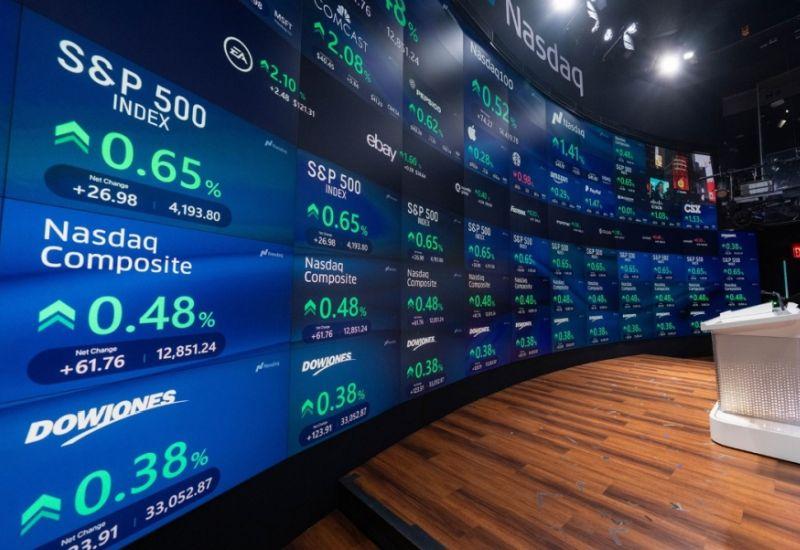
Index CFDs provide exposure to stock market benchmarks such as the S&P 500, Nasdaq-100, DAX, or FTSE 100.
Traders can speculate on movements in a broader market index without purchasing all its constituent securities.

Cryptocurrency CFDs provide derivative exposure to digital asset prices, such as Bitcoin or Ethereum.
Traders do not directly own or hold the underlying cryptocurrency. Availability and retail access can be restricted or prohibited in certain jurisdictions.
The profit or loss of a linear CFD depends on the difference between opening and closing prices and the quantity of the underlying exposure.
For a long CFD position, a simplified formula is:
P/L = (Close Price – Open Price )* Q
For a short CFD position:
P/L = (Close Price – Open Price )* Q
The formulas assume a linear contract, with the result denominated in the instrument’s quote or settlement currency.
Broker-specific contract multipliers, currency conversions, and transaction costs may also affect the final result.
Suppose a trader opens a long CFD position on a stock at $100 per share.
The position represents 100 shares.
The stock CFD price subsequently rises to $105.
The gross profit is:
The trader earns a gross trading profit of $500 before spread costs, commissions, financing charges, and other applicable adjustments.
Consider the same position, but assume the CFD price declines from $100 to $95.
The loss becomes:
(95-100) * 100=-$500
The trader experiences a gross loss of $500.
These examples demonstrate that CFD profit and loss are calculated using the full contract exposure rather than only the margin deposited.
CFD trading differs substantially from direct ownership of traditional financial assets.
| Feature | CFD Trading | Direct Asset Ownership |
|---|---|---|
| Own underlying asset | No | Generally yes |
| Leverage | Common | Depends on account and financing |
| Short exposure | Typically available | Requires an appropriate short-selling arrangement |
| Shareholder voting rights | Generally no | Usually yes for eligible shares |
| Overnight financing | Often applicable | Depends on financing arrangement |
| Counterparty structure | CFD provider | Market, intermediary, or custody structure |
| Holding period | Contract-dependent | Can often be indefinite |
| Risk | Derivative, leverage, and provider risks | Underlying investment and custody risks |
For example, purchasing 100 shares of a company normally provides direct economic and legal ownership of those shares, subject to the custody arrangement.
Opening a CFD representing 100 shares instead creates a derivative contract referencing the price of those shares.
CFD Trading provides a way to obtain directional exposure to financial markets without directly purchasing or selling the underlying assets.
It is used for speculative trading and, in certain circumstances, portfolio hedging.
For retail traders, understanding CFDs is important because leverage can create substantial financial risk relative to the margin initially deposited.
For brokers and risk managers, CFD positions introduce considerations involving exposure monitoring, counterparty relationships, margin requirements, and execution quality.
The practical suitability of CFDs depends on the instrument, trading objectives, risk tolerance, regulatory environment, and provider’s terms.
CFD trading involves significant risks, particularly when leverage is used. Leverage can amplify both profits and losses, making effective risk management essential for traders.
According to the Financial Conduct Authority (FCA), CFDs are high-risk financial products, and retail traders should carefully evaluate the risks before opening leveraged positions.
CFD Trading involves entering into a derivative contract that tracks the price movement of an underlying asset. Traders can profit or lose based on price changes without owning the asset itself.
CFD stands for Contract for Difference. It refers to an agreement to exchange the difference between the opening and closing values of a referenced financial instrument.
CFD leverage allows traders to control a position larger than their initial margin. The position’s profit or loss is generally based on its full market exposure rather than the margin deposited.
Yes. Losses may exceed the initial margin committed to an individual position. Whether total account losses can exceed deposited funds depends on applicable investor protections, account classification, and contractual terms.
No. Forex refers to the foreign exchange market, while CFDs are derivative contracts. Some Forex trading services provide exposure through CFDs or similar rolling spot arrangements.
CFDs can sometimes be held for extended periods, depending on contract terms. However, ongoing financing charges, leverage risks, and product structure can make them unsuitable for many long-term investment strategies.
CFDs are generally OTC derivative agreements with a provider, while exchange-traded futures are standardized contracts traded on regulated futures exchanges and centrally cleared.
No. CFD positions generally provide contractual exposure to an asset’s price movement without transferring ownership of the underlying instrument.
No. CFD trading involves significant uncertainty, and both long and short positions can generate substantial losses. Leverage increases the financial effect of adverse market movements.
No. The availability, marketing, and distribution of CFDs vary by jurisdiction. Traders should check the rules applicable to their country and the legal status of their provider.
Category
Trading Instruments / Derivatives / Forex
Related Terms
Contract for Difference, Risk Management, Leverage, Margin, Stop Out, Margin Call, Spread, Swap, Exposure, Hedging, Futures, Liquidity, MetaTrader 5, Algorithmic Trading