
There is no single best day trading platform for everyone. The right choice depends on your market—stocks, options, futures, forex, or crypto—plus your budget, trading style, location, and need for advanced tools such as Level 2 data, direct market access, and automated strategies.
For many active U.S. stock and options traders, Interactive Brokers suits advanced traders who want broad market access, while thinkorswim by Charles Schwab is strong for technical analysis and options. TradingView is excellent for charting but is not itself a full broker. “Commission-free” does not mean “cost-free”: spreads, slippage, margin interest, data fees, and execution quality still matter.
📋 Key Takeaways
- A trading platform is the software interface; a broker is the firm that holds your account and executes trades.
- Choose a platform that supports your specific market and order types.
- Compare total trading costs, not only headline commissions.
- Execution quality, market data, charting, and risk controls matter for active traders.
- Use a demo or paper-trading account before committing real capital.
- Check legal availability, regulation, deposit and withdrawal rules, and customer support in your country.
- No platform can guarantee trading profits.
Quick Comparison: Best Day Trading Platforms
| Platform / Broker | Best For | Cost Structure | Execution | Advanced Data |
|---|---|---|---|---|
| Interactive Brokers
|
Advanced traders, global market access, multi-asset trading | Tiered or fixed pricing; U.S. stock/ETF commissions from $0.0005–$0.0035 per share on tiered pricing or $0.005 per share on fixed pricing. | Broad order-routing options; suitable for active traders who need granular control | Free non-consolidated streaming data for U.S.-listed stocks and ETFs; paid bundles available for other data. |
| thinkorswim by Charles Schwab
|
Technical analysis, options trading, U.S. stock traders | $0 online listed-equity commission; $0.65 per options contract; other fees may apply. | Strong desktop platform with advanced order tools | Advanced charting and analytical tools; data availability depends on account and market |
| TradeStation
|
Strategy testing, automation, and algorithmic trading | Pricing varies by account type, market, and plan; verify current schedule before opening an account | Designed for active traders and strategy automation | Market-depth and data features may require eligible accounts or subscriptions |
| Webull
|
Beginners and smaller accounts seeking a modern mobile-first interface | Commission structure varies by product and jurisdiction; confirm current fees and regulatory disclosures | Suitable for many retail traders, but advanced execution controls are more limited than professional platforms | Enhanced data may be optional or subscription-based |
| TradingView
|
Charting, technical analysis, strategy visualization, and broker connectivity | Free and paid subscription tiers; broker commissions depend on the connected broker | Execution depends on the integrated broker | Data depth and features depend on plan, market, and connected data feed |


This table is a starting point, not a ranking. Fees, data packages, account minimums, available markets, and platform features can change, so always verify the current official pricing page and account agreement before opening an account.
Want to learn how day trading works and explore its key strategies? Read our guide to Day Trading to get started.
Want to explore trading signals and potential market opportunities? Visit our SIGNAL page for the latest trading setups.
Key Factors to Consider When Choosing a Day Trading Platform
Execution Speed and Order Routing
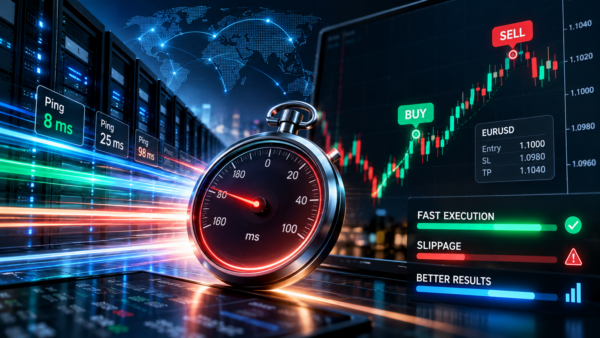
For day traders, execution quality can matter as much as commission. A market order may fill quickly, but in fast markets it can experience slippage. Limit orders give you price control but may not fill. Active traders should review available order types, routing choices, and how the broker handles order execution.
Direct market access (DMA) generally refers to more direct routing control, while some retail brokers use payment for order flow (PFOF) or other routing arrangements. Neither model is automatically better; what matters is whether the platform’s execution, spreads, and costs fit your strategy.
Platform Fees, Commissions, and Margin Rates
Look beyond “$0 commission.” Your real cost may include bid-ask spread, slippage, options contract fees, futures fees, margin interest, short-selling borrow fees, currency conversion, withdrawal fees, and market-data subscriptions.
For example, Interactive Brokers publishes tiered and fixed pricing for stocks, ETFs, options, futures, and currencies; its listed U.S. stock and ETF pricing ranges from $0.0005 to $0.0035 per share on tiered pricing or $0.005 per share on fixed pricing. Schwab lists $0 online commissions for listed equities and $0.65 per options contract, while noting that certain products and service methods still carry fees.
Charting Capabilities and Technical Indicators
A good day trading platform should support the indicators, drawing tools, timeframes, watchlists, alerts, and chart layouts you actually use. Traders who rely on fast decision-making should also test hotkeys, multi-chart layouts, order entry speed, and customization.
Market Data Quality
Level 1 data usually shows the best bid and ask, while Level 2 or market-depth data shows more detail about orders at different price levels. Some traders find this useful, but it is not necessary for every strategy. Check whether real-time data is included, delayed, or billed separately.
Interactive Brokers, for instance, provides free non-consolidated real-time streaming data for U.S.-listed stocks and ETFs, while other data packages and snapshot quotes may carry fees or activity-based waivers.
Security, Regulation, and Access
Before opening an account, confirm that the broker is legally available in your country, understand its regulatory status, and review account protection, login security, two-factor authentication, and withdrawal procedures. A platform may be excellent technically but unavailable or unsuitable in your jurisdiction.
Explore the Crypto Coins Heatmap to track cryptocurrency price movements and spot market trends at a glance.
In-Depth Reviews of the Top Day Trading Platforms
Interactive Brokers: Best for Advanced and Multi-Market Traders
Interactive Brokers is a strong option for experienced traders who want access to multiple asset classes and international markets. Its Trader Workstation offers extensive order types, routing controls, and analytical tools, but the interface can feel complex for beginners.
Its pricing is transparent but layered: commissions vary by asset class and pricing tier, and some market-data subscriptions may require minimum monthly commission activity to qualify for waivers. This makes IBKR better suited to traders who will use its advanced features rather than occasional investors.
thinkorswim by Charles Schwab: Best for Technical Analysis and Options
thinkorswim is widely used by active U.S. stock and options traders because of its advanced charting, customizable workspace, and analytical tools. Schwab lists $0 online commissions for listed equities and $0.65 per options contract, with exceptions for certain products and order methods.
The desktop platform can be resource-intensive, and beginners may need time to learn its layout. However, for traders focused on technical setups and options strategies, it is one of the most capable platforms in this comparison.
TradeStation: Best for Strategy Testing and Automation
TradeStation is designed for traders who want to build, test, and automate strategies. Its development tools and historical testing capabilities make it relevant for systematic traders, though it may be less beginner-friendly than simpler mobile-first apps.
Before choosing it, verify current pricing, data fees, API access, and the exact automation tools available for your account type and market. Platform capabilities and pricing can vary by region and account type.
Webull: Best for Beginners Seeking a Simple Interface
Webull is often considered by newer traders because of its clean interface, mobile access, and accessible charting tools. It can be a reasonable starting point for learning platform navigation, but traders should not assume that low or zero commissions equal low total cost.
Check the broker’s order-routing disclosures, available order types, data subscriptions, margin terms, and withdrawal process. Beginners should prioritize simplicity and risk controls over advanced features they may not yet need.
TradingView: Best for Charting and Multi-Broker Integration
TradingView is primarily a charting and market-analysis platform, although it supports trading through certain integrated brokers. It is especially useful for building watchlists, testing ideas visually, using Pine Script, and sharing charts.
If you choose TradingView, remember that execution quality, commissions, spreads, and account protection depend on the connected broker. TradingView itself should not be treated as a substitute for evaluating the broker behind the trades.
Ready to take your first steps into day trading? Read our guide on How to Start Day Trading to learn the basics and get started.
Best Day Trading Platforms by Asset Class
| Market | Platforms Worth Comparing | What to Prioritize |
|---|---|---|
| U.S. Stocks & ETFs | Interactive Brokers, thinkorswim, TradeStation, Webull | Order routing, extended-hours access, data fees, margin rules |
| Options | thinkorswim, Interactive Brokers, TradeStation | Options chains, multi-leg orders, Greeks, assignment risk, contract fees |
| Futures | Interactive Brokers, TradeStation, NinjaTrader-connected brokers | Contract fees, margin, data feeds, automation, and platform stability |
| Forex & CFDs | MetaTrader 4/5, cTrader, broker-specific platforms | Spread, commission, execution model, regulation, and withdrawal reliability |
| Crypto | Regulated exchanges and brokers available in your jurisdiction | Custody, security, liquidity, fees, withdrawal limits, and local legal status |
The best forex platform is not necessarily the best stock platform. MetaTrader and cTrader are common in forex and CFD trading, while thinkorswim, IBKR, and TradeStation are more commonly associated with U.S. equities, options, and futures. Always match the platform to the market you intend to trade.
Day Trading Platform Requirements for Beginners vs. Pros
What Beginners Actually Need
- A clear, uncluttered interface
- Paper trading or a demo account
- Simple order types, including limit and stop-loss orders
- Transparent fees and easy-to-understand account statements
- Reliable customer support
- Strong educational resources
Beginners do not need the most complex platform on day one. Advanced tools such as Level 2 data, direct routing, and algorithmic execution can create confusion before the basics of risk management and trade journaling are established.
What Professional Active Traders Require
- Fast and reliable order entry
- Custom hotkeys and multi-monitor layouts
- Advanced charting and market-depth tools
- Direct or flexible order routing
- API or automation support, where needed
- Transparent margin, borrow, and data costs
Hidden Costs and Account Capital Rules to Watch Out For
Trading Costs Beyond Commissions
A platform with zero commission can still be expensive if spreads are wide, execution is poor, or data subscriptions are high. Calculate the full round-trip cost of a typical trade, including entry, exit, spread, slippage, and any platform or data fees.
Margin, Borrow Fees, and Currency Conversion
If you trade on margin, review interest rates and margin requirements. Short sellers should also check borrow availability and borrow fees. International traders should consider currency-conversion costs, which can quietly reduce returns.
U.S. Pattern Day Trader Rules Have Changed
Historically, FINRA’s pattern day trader rule required at least $25,000 of equity in a margin account for customers designated as pattern day traders. FINRA has adopted new intraday margin standards that replace the prior day-trading margin requirements, including the day-trade count designation and the $25,000 pattern day trader minimum equity requirement.
Because implementation, account type, and broker policies can differ, ask your broker exactly how the new intraday margin framework applies to your account before relying on frequent day trading. The older $25,000 threshold may still appear in older educational materials, but it should not be treated as the current universal rule without checking the broker’s current disclosure.
Wondering whether day trading is right for you? Read our guide on Is Day Trading Worth It to explore the potential benefits, risks, and challenges.
How to Choose Your Ideal Day Trading Platform
✅ Day Trading Platform Checklist
☐ The platform and broker are legally available in my country.
☐ I understand the broker’s regulation, account protection, and withdrawal process.
☐ I have compared commissions, spreads, slippage, margin, and data fees.
☐ The platform supports the order types and risk controls I need.
☐ I tested the platform using a demo or paper-trading account.
☐ I tested a small live trade only after understanding the platform.
☐ I reviewed customer support, platform stability, and mobile/desktop compatibility.
☐ I understand that no platform or broker guarantees profitability.
🚀 Build Your Trading Skills
Compare trading platforms carefully, then build your skills with FastPip’s day trading guides, risk management resources, and market analysis.
Conclusion: Which Day Trading Platform Is Best?
The best day trading platform is the one that fits your market, budget, trading style, and location. Advanced multi-market traders may prefer Interactive Brokers; options-focused technical traders may prefer thinkorswim; strategy developers may prefer TradeStation; and beginners may prefer a simpler platform with paper trading and clear risk controls.
Do not choose based on a single feature such as “zero commission.” Compare total costs, execution quality, market access, security, and the availability of a demo account. Then test the platform with simulated trades before using meaningful capital.